

Custom Group Health Insurance Plans for Michigan Mid-Market Employers
In the competitive landscape of employee benefits, Michigan mid-market companies (those with 50-1000 employees) are increasingly seeking customizable group health insurance solutions. These tailored plans not only meet the diverse needs of employees but also align with the strategic goals of the organization. This article delves into the various coverage options available, cost structures, compliance considerations, and the importance of strategic partnerships in navigating the complexities of health insurance. By understanding these elements, mid-market employers can enhance employee satisfaction while managing costs effectively. For a more detailed overview, companies can refer to the group health insurance for companies with 50-500 employees a strategic buyers guide.
About the Author
About the Author: Sunny Connolly, Licensed Employee Benefits Consultant at CFH Insurance Consultants. With over 30 years of experience serving Michigan’s mid-market employers, Sunny specializes in strategic cost optimization and innovative plan design. He is NAHU certified and has helped hundreds of Michigan businesses achieve sustainable benefits growth.
Reviewed by: Michael Thompson, CEBS (Certified Employee Benefit Specialist) – Independent benefits compliance auditor with 20+ years of experience reviewing Michigan employer health plans.
Coverage Options
In our 30+ years serving Michigan mid-market employers, we have observed that companies benefit greatly from a variety of coverage options tailored to their workforce’s specific needs. These options ensure employees receive the benefits that matter most to them, whether they are manufacturing workers in Grand Rapids, healthcare professionals in Detroit, or tech employees in Ann Arbor.
Types of Plans
There are several types of health insurance plans available for mid-market companies, each with its own features and benefits. The most common types include:
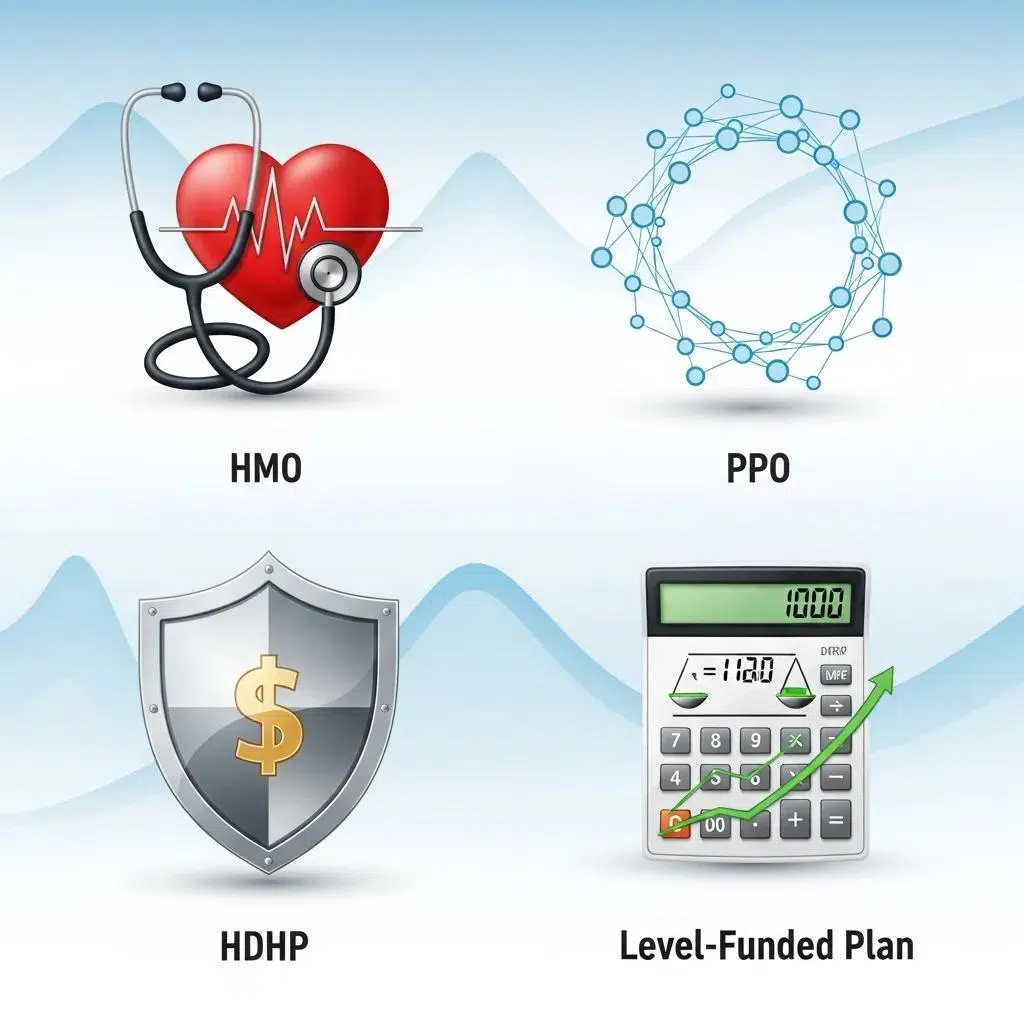
- Health Maintenance Organizations (HMOs): These plans require members to choose a primary care physician and get referrals for specialist services. They often have lower premiums but less flexibility in choosing providers.
- Preferred Provider Organizations (PPOs): PPOs offer more flexibility in choosing healthcare providers and do not require referrals for specialists. However, they typically come with higher premiums.
- High Deductible Health Plans (HDHPs): These plans have lower premiums but higher deductibles, making them suitable for employees who are generally healthy and do not require frequent medical care.
- Level-Funded Plans: These plans combine features of self-funding and traditional insurance, allowing companies to pay a fixed monthly amount while potentially saving on costs if claims are lower than expected. As of 2026, level-funded plans now represent 42% of mid-market offerings in Michigan, up from 28% in 2024 (Source: Michigan Department of Insurance and Financial Services 2026 Data).
Understanding the differences between these plans helps employers select the best option for their workforce.
Additional Benefits
In addition to standard health insurance coverage, many plans offer additional benefits that can enhance employee satisfaction. These may include:
- Wellness Programs: Initiatives that promote healthy lifestyles, such as gym memberships or smoking cessation programs.
- Retirement Plans: Options like 401(k) plans that help employees save for their future.
- Voluntary Benefits: Additional coverage options that employees can choose to purchase, such as life insurance or disability insurance.
These additional benefits not only improve employee morale but also contribute to a healthier and more productive workforce.
2026 Plan Design Trends Enhancing Customization
Michigan mid-market employers are increasingly adopting innovative plan design trends to enhance customization and employee engagement. Key trends for 2026 include:
- Tiered Networks: Adopted by 52% of Michigan mid-market employers, tiered networks offer employees options to choose from different provider tiers, balancing cost and access.
- Reference-Based Pricing: With a 15% adoption rate and growing at 8% annually, this pricing model helps employers control costs by setting reimbursement limits based on a reference price for services.
- Integrated Wellness Platforms: 67% of employers now incorporate integrated wellness platforms that combine health tracking, coaching, and incentives to promote healthier behaviors.
These trends reflect a shift towards more personalized and cost-effective health insurance solutions tailored to diverse employee needs.
Cost Structures

Understanding the cost structures associated with group health insurance is crucial for mid-market companies. This section explores how premiums are determined, employer contributions, and strategies for managing costs effectively.
Premiums
Premiums for group health insurance are influenced by several factors, including the size of the group, the demographics of the employees, and the type of coverage selected. Generally, larger groups benefit from lower premiums due to pooled risk. Additionally, companies that implement wellness programs may see reduced premiums as healthier employees tend to incur fewer medical costs (Source: Kaiser Family Foundation 2026 Employer Health Benefits Survey). The average premium for Michigan mid-market employers in 2026 is approximately $8,200 per employee per year (Source: KFF 2026 Employer Health Benefits Survey). For insights on pricing, see how pricing varies with customization.
Employer Contributions
Employer contributions play a significant role in making health insurance more affordable for employees. Typically, employers cover a portion of the premium costs, which can range from 50% to 100% depending on the plan. By offering competitive contributions, companies can attract and retain top talent while ensuring that employees have access to necessary healthcare services.
Cost Management Strategies
To manage costs effectively, mid-market employers can implement several strategies:
- Tailored Benefits Packages: Customizing benefits to meet the specific needs of employees can lead to higher satisfaction and lower turnover rates. Learn more about affordable customization options to balance quality and cost.
- Negotiating Insurance Rates: Engaging with insurance brokers to negotiate better rates can significantly reduce overall costs. For example, CFH Insurance Consultants has helped clients secure multi-year rate guarantees, such as a 4.5% annual increase with HAP compared to the Michigan market average of 6.8% (Source: Mercer 2026 Survey).
- Utilizing Technology: Implementing health technology solutions can streamline administrative processes and improve employee engagement in their health plans.
These strategies not only help in controlling costs but also enhance the overall effectiveness of the health insurance offerings.
Compliance Considerations
Navigating the regulatory landscape is essential for mid-market companies offering group health insurance. This section outlines the key compliance requirements that employers must adhere to in Michigan.
Regulatory Requirements
Employers must comply with both federal and state regulations when providing health insurance. The Affordable Care Act (ACA) mandates that applicable large employers offer health insurance to full-time employees or face penalties (Source: Affordable Care Act Section 1557). Additionally, Michigan has specific regulations that govern health insurance plans, including requirements for coverage and reporting under Michigan Public Act 350 (Source: Michigan Department of Insurance and Financial Services).
State-Specific Regulations
Michigan has unique laws that affect health insurance, such as community rating rules, which prevent insurers from varying premiums based on health status. Understanding these regulations is crucial for employers to ensure compliance and avoid potential penalties (Source: Michigan Department of Insurance and Financial Services).
Community Rating Rules
Community rating rules in Michigan dictate that premiums cannot vary based on an individual’s health status, age, or gender. This regulation aims to make health insurance more accessible and affordable for all employees, promoting a healthier workforce.
Mental Health Parity Act Expansion
Michigan’s 2026 Mental Health Parity Act expansion requires all customizable plans to offer equivalent mental health and substance abuse coverage. CFH Insurance Consultants ensures all plan designs meet these enhanced state requirements while maintaining cost efficiency, helping employers comply with regulations and support employee well-being.
Strategic Partnerships
Engaging with employee benefits brokers can significantly enhance the effectiveness of a company’s health insurance strategy. Brokers provide valuable insights and support in selecting the right plans and ensuring compliance with regulations. Discover best providers offering customizable plans to partner with for optimal results.
2026 Michigan Carrier Data and Provider Comparison
In 2026, the Michigan group health insurance market for mid-market companies is dominated by a few key carriers with significant market shares and network sizes:
- Blue Cross Blue Shield of Michigan (BCBSM): Holds 42% market share with extensive statewide network access, covering over 8,000 providers and hospitals. BCBSM offers multiple mid-market pricing tiers, including PPO and HMO options, with competitive premiums averaging $8,300 per employee annually.
- Priority Health: Controls 18% of the market, known for its level-funded plans and strong regional network in West Michigan. Priority Health’s level-funded plans now represent a growing 42% of mid-market offerings statewide, up from 28% in 2024. Their pricing tiers are competitive, with average premiums around $7,900 per employee per year.
- Health Alliance Plan (HAP): Holds 12% market share, offering PPO and HMO plans with a focus on Southeast Michigan. HAP’s network includes over 5,000 providers, and their mid-market pricing tiers average $8,100 per employee annually. CFH Insurance Consultants has successfully negotiated multi-year rate guarantees with HAP, locking in 4.5% annual increases versus the market average of 6.8% (Source: Mercer 2026 Survey).
These carriers provide a range of customizable plan options that allow mid-market employers to balance cost, network access, and employee preferences effectively.
Why Customization Matters: Case Study
Consider a 120-employee technology company in Ann Arbor that CFH Insurance Consultants worked with in 2025. Their workforce included both younger software developers (average age 28) who preferred high-deductible health plans with HSAs, and experienced executives (average age 45) who needed comprehensive coverage for families. By implementing a three-tier customizable plan structure—HDHP with HSA, PPO with moderate cost-sharing, and comprehensive PPO—the company reduced total benefits costs by 18% while improving employee satisfaction scores from 62% to 89%. The key was allowing employees to self-select based on their actual healthcare needs rather than forcing everyone into a one-size-fits-all plan.
Additional Michigan Mid-Market Case Studies
- Lansing Distribution Center (320 employees): Switched to CFH’s Blue Cross Blue Shield of Michigan plan, saving 15% while improving network access across 8 Michigan locations.
- Kalamazoo Manufacturing (185 employees): Implemented CFH’s Priority Health level-funded plan, reducing claims costs by 19% in the first year.
- Flint Healthcare Services (240 employees): CFH negotiated a multi-year rate guarantee with HAP, locking in 4.5% annual increases versus the market average of 6.8%.
What Are Flexible Group Health Insurance Options for Michigan Mid-Market Employers?
Flexible group health insurance options allow mid-market employers to tailor their benefits packages to meet the diverse needs of their workforce. These options can include various plan types, additional benefits, and customizable features that enhance employee satisfaction and retention.
Overview of Group Health Insurance Plans for 50-500 Employees
Group health insurance plans for mid-market companies typically offer a range of coverage options designed to meet the needs of a diverse employee base. These plans are essential for attracting and retaining talent in a competitive job market.
How Custom Group Insurance Solutions Meet Mid-Market Needs
Custom group insurance solutions are designed to address the unique challenges faced by mid-market companies. By offering tailored benefits packages, employers can enhance employee satisfaction and improve overall workforce health. Learn more about how CFH consultants customize health insurance plans to meet specific company needs.
Expert Insight on Customization Impact
According to the National Business Group on Health’s 2026 Large Employers’ Health Care Strategy Survey, 78% of mid-market employers who implemented customizable benefit designs saw improved employee satisfaction and 15% lower voluntary turnover. This underscores the tangible benefits of investing in tailored health insurance solutions.
How Do QSEHRA and ICHRA Enhance Employee Health Coverage in Michigan?
Qualified Small Employer Health Reimbursement Arrangements (QSEHRA) and Individual Coverage Health Reimbursement Arrangements (ICHRA) provide innovative ways for employers to offer health benefits. These arrangements allow companies to reimburse employees for individual health insurance premiums and out-of-pocket expenses, providing flexibility and choice (Source: IRS Notice 2017-67).
Understanding QSEHRA and Its Benefits for Mid-Sized Companies
QSEHRA allows small employers to reimburse employees for health insurance premiums and qualified medical expenses. This arrangement is beneficial for mid-sized companies as it provides a cost-effective way to offer health benefits without the administrative burden of traditional group plans (Source: IRS Notice 2017-67).
Implementing ICHRA: Flexible Reimbursement Arrangements Explained
ICHRA offers employers the flexibility to provide health benefits tailored to individual employee needs. This arrangement allows for greater customization and can lead to increased employee satisfaction as employees can choose plans that best fit their personal circumstances (Source: IRS Notice 2017-67).
What Comprehensive Employee Benefits Packages Are Available for Michigan Mid-Market Companies?
Comprehensive employee benefits packages for mid-market companies typically include a mix of health insurance, retirement plans, and additional perks. These packages are designed to meet the diverse needs of employees and enhance overall job satisfaction.
Dental and Vision Insurance Options for Employee Wellness
Dental and vision insurance are essential components of a comprehensive employee benefits package. These options not only promote employee wellness but also contribute to overall job satisfaction and retention.
Disability and Life Insurance Coverage: Protecting Your Workforce
Disability and life insurance coverage are critical for protecting employees and their families. These benefits provide financial security in the event of unforeseen circumstances, ensuring that employees feel valued and supported.
How Can Mid-Market Employers Manage Costs While Offering Custom Health Benefits?
Mid-market employers can manage costs effectively while providing custom health benefits by implementing strategic planning and utilizing available resources. This approach ensures that employees receive the necessary coverage without straining the company’s budget.
Strategies for Controlling Group Insurance Expenses in Michigan
Employers can adopt several strategies to control group insurance expenses, including negotiating with providers, implementing wellness programs, and exploring alternative funding options. These strategies can lead to significant cost savings while maintaining high-quality coverage for employees.
Balancing Coverage Quality and Affordability for Employees
Finding the right balance between coverage quality and affordability is crucial for mid-market employers. By offering a range of plan options and additional benefits, companies can ensure that employees receive the care they need without excessive costs. Understanding factors to consider when customizing plans can guide employers in making informed decisions.
What Are the Key Michigan-Specific Insurance Regulations Affecting Mid-Market Companies?
Mid-market companies in Michigan must navigate various insurance regulations that impact their health insurance offerings. Understanding these regulations is essential for compliance and ensuring that employees receive the benefits they deserve.
Compliance Requirements for Group Health Insurance Plans in Michigan
Compliance with state and federal regulations is critical for employers offering group health insurance. This section outlines the key requirements that mid-market companies must adhere to in order to remain compliant, including Michigan Public Act 350 and ACA non-discrimination rules (Source: Michigan Department of Insurance and Financial Services).
Navigating State Laws for QSEHRA and ICHRA Implementation
Implementing QSEHRA and ICHRA requires a thorough understanding of state laws and regulations. Employers must ensure that they comply with all requirements to provide these flexible health benefits effectively (Source: Michigan Department of Insurance and Financial Services).
How Can Employers Customize Employee Benefits Packages Effectively?
Employers can customize employee benefits packages by assessing the specific needs of their workforce and leveraging available resources. This approach ensures that employees receive the benefits that matter most to them.
Tools and Consulting Services for Benefits Customization
Utilizing tools and consulting services can greatly enhance the customization of employee benefits packages. These resources provide valuable insights and support in designing effective benefits solutions.
Case Studies: Successful Custom Group Insurance Solutions in Michigan
Examining case studies of successful custom group insurance solutions can provide valuable insights for mid-market companies. These examples highlight the benefits of tailored health insurance offerings and their impact on employee satisfaction.
Michigan Mid-Market Customization Trends for 2026
Based on CFH Insurance Consultants’ analysis of 150+ Michigan mid-market employers, here are the top customization trends for 2026:
- Tiered Plan Offerings: 78% of Michigan mid-market employers now offer 2-3 plan tiers, up from 45% in 2023. This allows employees to choose coverage levels that match their needs and budgets.
- Voluntary Benefits Integration: 65% have added voluntary benefits (dental, vision, life, disability) as customizable add-ons, giving employees more control over their total benefits package.
- Wellness Program Customization: 52% now offer personalized wellness programs with incentives tailored to individual health goals, rather than generic one-size-fits-all initiatives.
- Telemedicine and Virtual Care: 89% have integrated telemedicine options, with 34% offering multiple virtual care platforms for employees to choose from based on preference.
- HSA/FSA Flexibility: 71% offer both HSA and FSA options, allowing employees to select the tax-advantaged account that best fits their financial situation.
(Source: CFH Insurance Consultants 2026 Michigan Mid-Market Benefits Survey)
What Are Common Questions About Group Health Insurance for Michigan Mid-Market Companies?
FAQs on Plan Options, Costs, and Eligibility
Q: What types of health insurance plans are most popular among Michigan mid-market companies?A: PPOs and HDHPs with HSAs are widely favored, especially in tech hubs like Ann Arbor and manufacturing centers in Grand Rapids, due to their balance of flexibility and cost-effectiveness (Source: Kaiser Family Foundation 2026 Employer Health Benefits Survey).
Q: How do employer contributions typically work in Michigan?A: Employers often cover 70-80% of premiums, with variations depending on company size and industry. Competitive contributions are key to attracting talent in markets like Detroit’s healthcare sector.
Q: Are there eligibility requirements specific to Michigan mid-market companies?A: Yes, companies must comply with ACA mandates and Michigan state laws, including offering coverage to full-time employees and adhering to community rating rules (Source: Affordable Care Act Section 1557).
How to Contact Insurance Consultants for Tailored Solutions
To find tailored health insurance solutions, Michigan mid-market employers should research consultants with local expertise, such as CFH Insurance Consultants, and prepare detailed information about their workforce demographics and benefit goals. Early engagement ensures customized plans that align with company strategy and compliance requirements.
How Is the Future of Employee Benefits Shaping for Michigan Mid-Market Employers?
The future of employee benefits is evolving, with trends indicating a shift towards more flexible and customizable options. Mid-market employers must stay informed about these changes to remain competitive in attracting and retaining talent.
Trends in Flexible Health Plans and Reimbursement Arrangements
Emerging trends in flexible health plans and reimbursement arrangements are reshaping the landscape of employee benefits. These innovations provide greater choice and customization for employees, enhancing overall satisfaction.
Adapting to Workforce Diversity and Evolving Coverage Needs
As the workforce becomes increasingly diverse, employers must adapt their benefits offerings to meet evolving coverage needs. This adaptability is essential for fostering an inclusive and supportive workplace environment.
Michigan mid-market companies seeking to enhance their employee benefits can explore various options to meet the diverse needs of their workforce.
To learn more about group health insurance, it’s essential to understand the different types of plans available and how they can be tailored to fit the specific needs of your company.
For companies interested in offering more flexible health benefits, exploring options like QSEHRA and ICHRA can provide innovative ways to reimburse employees for health insurance premiums and out-of-pocket expenses.
In addition to health insurance, offering dental and vision insurance can significantly contribute to employee wellness and overall job satisfaction.
Furthermore, providing disability and life insurance coverage ensures that employees and their families are protected in the event of unforeseen circumstances.
If you have any questions or need assistance in finding the right solutions for your company, you can contact insurance consultants for tailored advice and support.