

ACA Compliance for Employers: Essential Guidelines to Meet Employer Mandate and Reporting Requirements
Understanding the Affordable Care Act (ACA) is crucial for employers to ensure compliance and avoid penalties. The ACA mandates specific requirements for businesses regarding health insurance coverage for employees, which can be complex and challenging to navigate. This article provides essential guidelines on ACA compliance for employers, detailing the core requirements, reporting obligations, and potential penalties for non-compliance. Employers will learn how to define full-time employees, fulfill reporting requirements, and utilize compliance checklists effectively. By addressing these critical areas, businesses can mitigate risks and ensure they meet the necessary standards set forth by the ACA.
What Are the Core Employer Mandate Requirements Under the ACA?
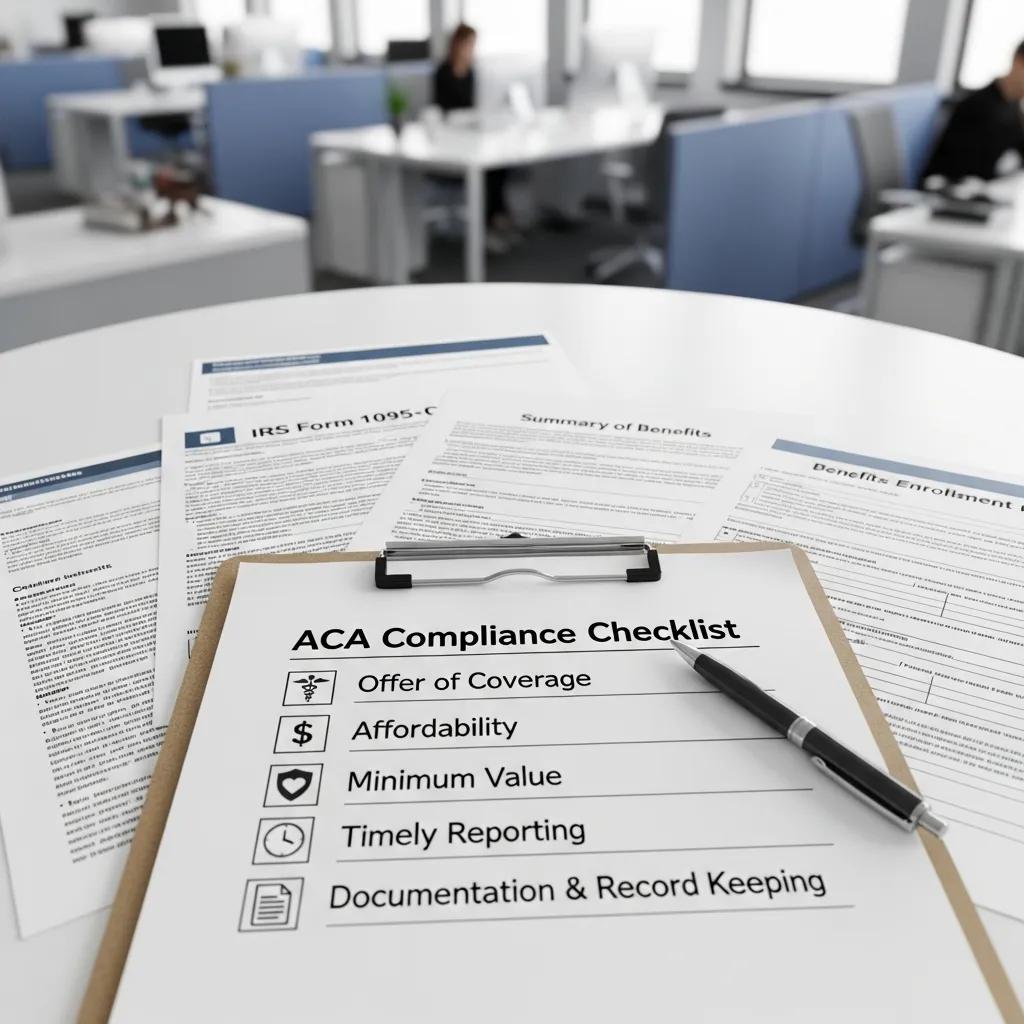
The ACA establishes core requirements that employers must adhere to in order to comply with the employer mandate. These requirements include providing minimum essential coverage to full-time employees and ensuring that the coverage is affordable. Employers with 50 or more full-time equivalent employees are subject to these mandates, which aim to increase access to health insurance and reduce the number of uninsured individuals. Compliance with these requirements not only fulfills legal obligations but also promotes employee health and well-being.
Who Is Subject to the Employer Shared Responsibility Provision?
The Employer Shared Responsibility Provision applies to applicable large employers (ALEs), defined as those with 50 or more full-time employees or full-time equivalent employees. ALEs are responsible for offering affordable health insurance that meets minimum essential coverage standards to their full-time employees. Failure to comply with this provision can result in significant penalties, making it essential for employers to accurately assess their status and obligations under the ACA.
Further clarifying the obligations of ALEs, official guidance outlines both payment and reporting duties.
ACA Employer Shared Responsibility & Reporting
ALEs must pay to the IRS Employer Shared Responsibility payments. Second, ALEs have information reporting responsibilities.
Employer Shared Responsibility Provisions under the Affordable Care Act, 2016
How Is a Full-Time Employee Defined for ACA Compliance?
Under the ACA, a full-time employee is defined as an individual who works an average of 30 hours or more per week. This definition is critical for employers to determine their obligations regarding health insurance coverage. Employers must track employee hours accurately to ensure compliance and avoid penalties associated with misclassification. Understanding this definition helps employers effectively manage their workforce and meet ACA requirements.
Official guidance further elaborates on how employers can define full-time employees, particularly for the purpose of calculating potential shared responsibility payments.
Defining Full-Time Employees for ACA Payments
guidance on methods employers are permitted (but not required) to use for purposes of calculating any assessable payment under the employer shared responsibility provisions of the Affordable Care Act.
Determining Full-Time Employees for Purposes of Employer Shared Responsibility Payments under the Affordable Care Act, 2012
How Do Employers Fulfill ACA Reporting Requirements and Deadlines?

Employers must fulfill specific reporting requirements to demonstrate compliance with the ACA. This includes preparing and filing Forms 1094-C and 1095-C, which provide information about health coverage offered to employees. Employers should stay informed about deadlines for filing these forms to avoid penalties. The reporting process involves collecting data on employee health coverage and ensuring that it aligns with ACA standards.
Which Forms Must Employers File for ACA Compliance?
To comply with ACA reporting requirements, employers must file the following forms:
- Form 1094-C: This form serves as a transmittal form for the 1095-C forms and provides summary information about the employer’s health coverage.
- Form 1095-C: This form is provided to each full-time employee and details the health coverage offered, including the months of coverage and the employee’s share of the premium.
- Filing Deadlines: Employers must file these forms with the IRS and provide copies to employees by specific deadlines, typically by the end of January for the previous calendar year.
What Are the Updated ACA Reporting Deadlines for 2026?
For the year 2026, employers must adhere to updated reporting deadlines. The IRS has set the following key dates:
- January 31, 2026: Deadline for providing Form 1095-C to employees.
- February 28, 2026: Deadline for filing paper Forms 1094-C and 1095-C with the IRS.
- March 31, 2026: Deadline for filing electronic Forms 1094-C and 1095-C with the IRS.
Staying informed about these deadlines is crucial for employers to avoid penalties associated with late filings.
What Are the Potential ACA Employer Penalties and How Can They Be Avoided?
Employers who fail to comply with ACA requirements may face significant penalties. The penalties can vary based on the nature of the violation, such as not offering coverage or failing to meet affordability standards. To avoid these penalties, employers should implement proactive compliance strategies, including regular audits of health coverage offerings and employee classifications. Understanding the potential penalties and taking steps to mitigate risks is essential for maintaining compliance.
How Is the Employer Shared Responsibility Payment Calculated?
The Employer Shared Responsibility Payment is calculated based on the number of full-time employees and the nature of the employer’s compliance with ACA requirements. If an employer fails to offer affordable coverage to full-time employees, they may be subject to a penalty for each month that coverage is not provided. The calculation involves assessing the number of employees who received a premium tax credit and determining the applicable penalty amount based on IRS guidelines.
This determination of employer shared responsibility, particularly for those with 50 or more FTEs, directly impacts the calculation of potential ACA employer penalties.
ACA Employer Penalty & FTE Determination
employers employing at least 50 full-time equivalent (FTE) employees are subject to the employer shared responsibility determination. This includes the calculation of any potential employer penalty.
The Affordable Care Act’s (ACA) Employer Shared Responsibility Determination and the Potential ACA Employer Penalty, 2015
What Strategies Mitigate the Risk of ACA Penalties?
Employers can adopt several strategies to mitigate the risk of ACA penalties:
- Regular Compliance Audits: Conducting audits to ensure that health coverage meets ACA standards can help identify potential issues before they result in penalties.
- Employee Education: Providing employees with information about their health coverage options and responsibilities can enhance compliance and reduce misunderstandings.
- Consulting Services: Engaging with ACA compliance consulting services can provide expert guidance on navigating complex regulations and ensuring adherence to requirements.
How Can Employers Use an ACA Compliance Checklist to Ensure Full Compliance?
An ACA compliance checklist can serve as a valuable tool for employers to ensure they meet all necessary requirements. This checklist should include key steps such as assessing employee classifications, reviewing health coverage offerings, and preparing for reporting obligations. By following a structured checklist, employers can systematically address compliance issues and reduce the risk of penalties.
What Are the Key Steps Included in an ACA Compliance Checklist for Employers?
Key steps in an ACA compliance checklist for employers include:
- Determine ALE Status: Assess whether the business qualifies as an applicable large employer.
- Review Health Coverage: Ensure that health insurance offerings meet minimum essential coverage and affordability standards.
- Track Employee Hours: Accurately monitor employee hours to determine full-time status and compliance obligations.
- Prepare for Reporting: Gather necessary data for Forms 1094-C and 1095-C and stay informed about filing deadlines.
How Does Expert ACA Compliance Consulting Support Employers?
Expert ACA compliance consulting can provide invaluable support to employers navigating the complexities of the ACA. Consulting services can help businesses understand their obligations, prepare for reporting, and implement effective compliance strategies. By leveraging the expertise of ACA consultants, employers can ensure they remain compliant and avoid costly penalties associated with non-compliance.
CFH Insurance Consultants is a specialized insurance consulting firm focused on guiding businesses through complex insurance regulations, including ACA compliance for employers. Their expertise can help employers navigate the intricacies of the ACA, ensuring that they meet all necessary requirements and avoid potential penalties.