
2026 HSA and FSA Contribution Limits: Comprehensive Guide for Michigan Employers
By CFH Insurance Consultants, Licensed Benefits Consultant with over 15 years of experience in Michigan employer compliance and employee benefits strategy, CFH Insurance Consultants
As Michigan employers prepare for the upcoming year, understanding the contribution limits for Health Savings Accounts (HSAs) and Flexible Spending Accounts (FSAs) is crucial. These tax-advantaged accounts play a significant role in employee benefits, allowing for effective healthcare savings. In 2026, the contribution limits for HSAs and FSAs have been updated by the IRS, impacting both employers and employees. This guide provides detailed insights into the specific limits, compliance requirements, and the benefits these accounts offer. Employers will learn how to navigate the new regulations and optimize their employee benefits packages effectively. Key sections cover the contribution limits, compliance steps, tax benefits, and eligibility criteria for HSAs and FSAs in Michigan, based on authoritative sources including IRS Publication 969 and CMS.gov guidance.
2026 HSA and FSA Contribution Limits: A Compliance Guide
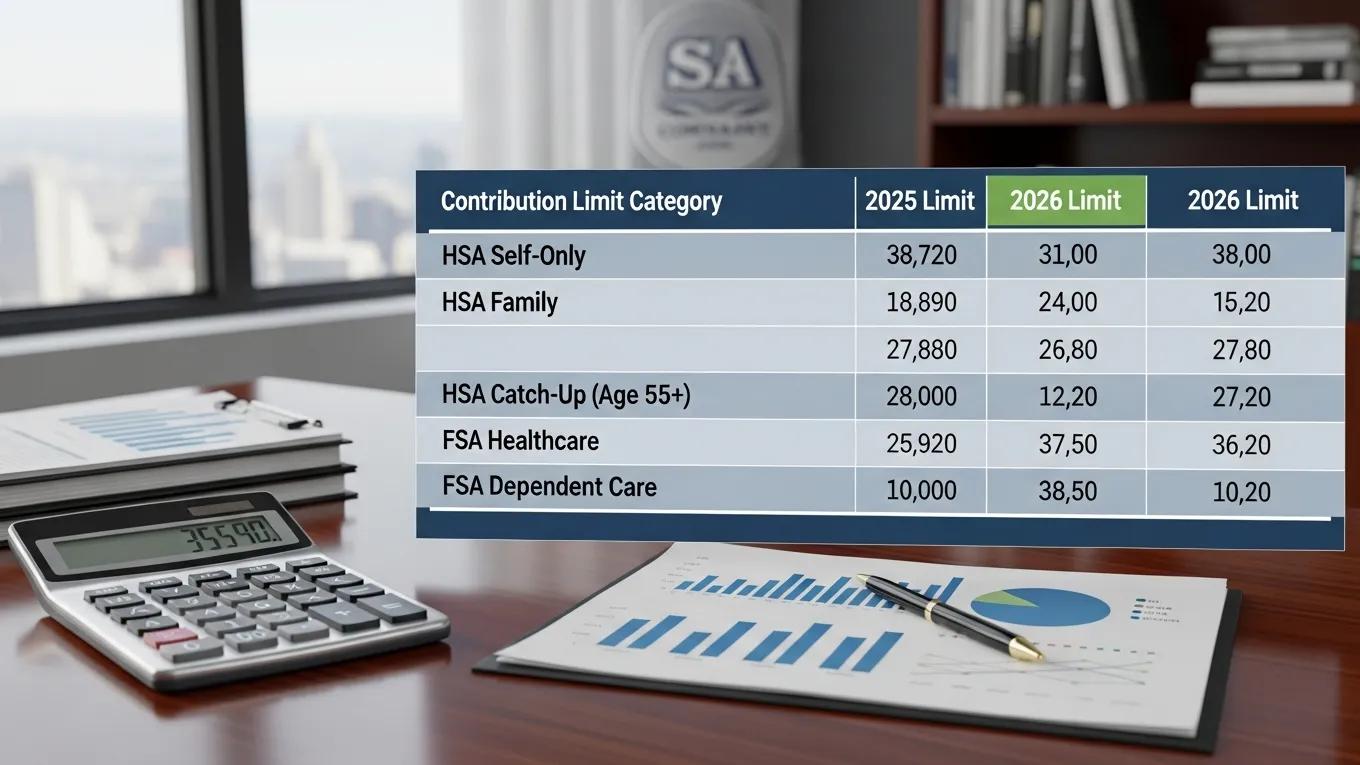
In 2026, the contribution limits for Health Savings Accounts (HSAs) and Flexible Spending Accounts (FSAs) in Michigan have been established by the IRS to help employees maximize their healthcare savings. The specific limits are as follows:
- HSA Contribution Limits: $4,400 for self-only coverage; $8,750 for family coverage; plus an additional $1,000 catch-up contribution for individuals aged 55 and older
- FSA Contribution Limits: Health Care FSA: $3,400 per year; Dependent Care FSA: $7,500 per household (or $3,750 if married filing separately)
For context, the 2025 limits were slightly lower, with HSA family coverage capped at $8,750 and Health Care FSA at $3,400. These updated limits reflect inflation adjustments and IRS guidance for 2026.
These limits are essential for employers to communicate to their employees to ensure compliance and maximize the benefits of these accounts.
How Do 2026 HSA Contribution Limits Affect Michigan Employees?
The 2026 HSA contribution limits significantly impact Michigan employees by providing them with opportunities for tax savings and enhanced healthcare funding. Contributions to HSAs are made with pre-tax dollars, which reduces taxable income. This tax advantage is a key benefit, as it allows employees to save money on their overall tax burden. Additionally, HSAs offer a triple tax advantage: contributions are tax-deductible, the funds grow tax-free, and withdrawals for qualified medical expenses are also tax-free. To qualify for HSA contributions, employees must be enrolled in a high-deductible health plan (HDHP), which further emphasizes the importance of understanding these limits.
What Are the Updated 2026 FSA Contribution Rules for Michigan Employers?
The updated contribution rules for FSAs in Michigan for 2026 reflect changes aimed at enhancing employee benefits. Employers must adhere to the following contribution limits:
- Health Care FSA: The contribution limit is set at $3,400 per year, allowing employees to allocate funds for eligible medical expenses.
- Dependent Care FSA: The contribution limit is $7,500 per household, or $3,750 if married filing separately, providing support for childcare expenses. Not every care cost qualifies — see what a dependent care FSA covers.
These updated rules ensure that employees can effectively manage their healthcare costs while maximizing their tax benefits.
How Must Michigan Employers Comply with 2026 HSA and FSA IRS Regulations?
Compliance with IRS regulations regarding HSAs and FSAs is essential for Michigan employers. Employers must communicate the contribution limits to their employees clearly. Contributions made to HSAs by employers are tax-deductible, which can provide significant tax savings. Additionally, employers can allow employees to fund both FSAs and HSAs through pre-tax payroll deductions, enhancing the overall benefits package. Compliance with Section 125 cafeteria plans is also necessary, as it governs the tax treatment of these accounts. Payroll integration keeps deductions in step with enrollment changes, so errors do not build up between pay cycles.
What Are Employer Responsibilities for HSA and FSA Contributions in Michigan?

Employers in Michigan have specific responsibilities regarding HSA and FSA contributions. These include:
- Communication of Contribution Limits: Employers must ensure that employees are aware of the contribution limits for HSAs and FSAs.
- Tax Treatment of Contributions: Employers should understand the tax implications of their contributions to these accounts.
- Employee Education on Benefits: Providing education about the benefits and rules associated with HSAs and FSAs is crucial for maximizing employee participation.
By fulfilling these responsibilities, employers can enhance their benefits offerings and support their employees’ financial well-being.
Which Compliance Steps Should Michigan Employers Follow for 2026?
To ensure compliance with the updated regulations for HSAs and FSAs in 2026, Michigan employers should follow these steps:
- Adhere to IRS Regulations: Employers must stay informed about the latest IRS guidelines regarding HSAs and FSAs.
- Communicate Limits to Employees: Clearly communicate the contribution limits and any changes to employees.
- Implement Pre-Tax Payroll Deductions: Allow employees to fund their HSAs and FSAs through pre-tax payroll deductions to maximize tax benefits.
By following these compliance steps, employers can effectively manage their employee benefits programs.
What Tax Benefits and Employee Eligibility Criteria Apply to 2026 HSAs and FSAs?
The tax benefits associated with HSAs and FSAs are significant for both employers and employees. HSA contributions are tax-deductible, which reduces taxable income for employees. FSAs provide immediate tax savings through pre-tax contributions, allowing employees to access funds for medical expenses as needed. To be eligible for HSA contributions, employees must be enrolled in a high-deductible health plan (HDHP). FSAs, on the other hand, are available to all employees if offered by the employer, making them a versatile option for healthcare savings.
How Do Tax Advantages Impact Michigan Employees Using HSAs and FSAs?
Tax advantages play a crucial role in the effectiveness of HSAs and FSAs for Michigan employees. Contributions to HSAs are made with pre-tax dollars, which significantly reduces taxable income. This tax strategy allows employees to save money on their overall tax burden. Additionally, FSAs provide immediate access to funds for medical expenses, enabling employees to manage healthcare costs effectively. By utilizing these tax-advantaged accounts, employees can save significantly on taxes while ensuring they have the necessary funds for healthcare expenses.
Who Is Eligible for 2026 HSA and FSA Plans in Michigan?
Eligibility criteria for HSAs and FSAs in Michigan are essential for both employers and employees to understand. To qualify for an HSA, an individual must be enrolled in a high-deductible health plan (HDHP). This requirement ensures that employees are utilizing the account for its intended purpose of managing high healthcare costs. FSAs are available to all employees if offered by the employer, providing a flexible option for managing healthcare expenses. Michigan conforms to federal tax treatment for HSAs and FSAs, ensuring consistency in eligibility criteria.
How Do QSEHRA and ICHRA Compare to HSAs and FSAs for Michigan Employers in 2026?
Qualified Small Employer Health Reimbursement Arrangements (QSEHRA) and Individual Coverage Health Reimbursement Arrangements (ICHRA) offer alternative options for Michigan employers compared to HSAs and FSAs. QSEHRA is limited to small employers with fewer than 50 full-time equivalent employees, while ICHRA is available to employers of any size. Employees receiving QSEHRA reimbursements generally cannot contribute to an HSA, which is a critical consideration for employers when designing their benefits packages.
What Are the Key Differences Between QSEHRA, ICHRA, and HSA/FSA Plans?
Understanding the differences between QSEHRA, ICHRA, and HSA/FSA plans is essential for Michigan employers. Key differences include:
- Eligibility and Contribution Limits: QSEHRA has specific annual contribution caps set by the IRS, while ICHRA allows for different contribution amounts based on employee classes.
- Reimbursement Flexibility: ICHRA provides more flexibility in reimbursement options compared to traditional HSAs and FSAs.
- HSA Compatibility: Employees can contribute to an HSA if they are enrolled in an HSA-eligible health plan, which is not the case for those receiving QSEHRA reimbursements.
These distinctions are vital for employers to consider when evaluating their employee benefits strategies.
How Can Michigan Employers Integrate QSEHRA and ICHRA with HSAs and FSAs?
Integrating QSEHRA and ICHRA with HSAs and FSAs can enhance the overall benefits package for Michigan employers. Employers must adhere to IRS regulations when setting up these arrangements. They can set fixed reimbursement amounts for QSEHRA within IRS limits, ensuring compliance while providing valuable benefits to employees. Clear communication about how QSEHRA and ICHRA work alongside HSAs and FSAs is crucial for maximizing employee understanding and participation.
Practical Steps for Administering the 2026 Limits
The limits themselves are simple to look up. What causes problems is the administration around them, and the same few issues recur.
- Update payroll deduction caps before the first January payroll, not after. Catching an over-contribution later means correcting it through payroll and, for HSAs, potentially withdrawing an excess contribution with earnings before the tax filing deadline.
- Check your HSA eligibility against the deductible minimums, not just the contribution maximums. A plan design can drift out of HDHP qualification when the statutory minimum deductible rises and your plan’s deductible does not, which silently disqualifies every employee’s HSA contribution for the year.
- Handle the catch-up correctly. The additional HSA contribution is available from age 55, and it belongs to the accountholder — a spouse can only make their own catch-up into their own HSA.
- Confirm your FSA carryover or grace period, and that you have only one. A plan may offer a carryover or a grace period but not both, and this is a common document error rather than an administrative one.
- Communicate the FSA deadline twice, once at enrollment and once about sixty days before the plan year ends. Forfeited FSA balances are the benefit failure employees remember.
For the current figures and the prior years, see our pages on HDHP and HSA contribution limits and choosing between an HRA, HSA and FSA.
What Common Questions Do Michigan Employers Have About 2026 HSA and FSA Contribution Limits?
Michigan employers often have questions regarding the contribution limits for HSAs and FSAs. Common inquiries include:
- What are the specific contribution limits for HSAs and FSAs in 2026?
- How can employers ensure compliance with IRS regulations?
- What are the tax implications of employer contributions to these accounts?
Addressing these questions is essential for employers to navigate the complexities of employee benefits effectively.
What Expenses Qualify for HSAs and FSAs Under 2026 Rules?
Understanding which expenses qualify for HSAs and FSAs is crucial for both employers and employees. Eligible expenses include:
- HSAs: Can be used for a wide range of medical expenses, including medical, dental, and vision care.
- FSAs: Cover medical, dental, and vision expenses, as well as limited Dependent Care FSAs for childcare expenses.
By knowing which expenses are eligible, employees can make informed decisions about their healthcare spending.
Can Employers Make Contributions to Employee HSAs in Michigan?
Employers in Michigan can make contributions to employee HSAs, providing additional support for their employees’ healthcare needs. Contributions made by employers to HSAs are exempt from payroll taxes, which can lead to significant savings for both parties. Additionally, Michigan does not impose state income tax on HSA contributions, making it an attractive option for employers looking to enhance their benefits offerings.
Questions We Get
What information do you need to quote our group?
A current plan summary, the renewal if you have it, the last few months of billing statements, and a census with dates of birth, zip codes and coverage tiers. For larger groups, claims experience and pharmacy utilization if the carrier will release it. That is enough to model realistic options rather than illustrative ones.
Related Reading
Unhappy with your current broker? Switch to CFH. Your employees won’t notice. You will.
Also from CFH: What the 2025 tax law changed for employer benefit plans in 2026
