

By CFH Insurance Consultants, CFH Insurance Consultants
Navigating the complexities of group health insurance costs can be challenging for employers and employees alike. This article delves into the average costs associated with group health insurance, emphasizing the various factors that influence these costs. Readers will gain insights into how demographics, claims history, and group sizes affect premiums. Additionally, we will explore the different types of group health insurance plans, their cost implications, and strategies for managing expenses effectively. By the end of this article, you will be equipped with knowledge about cost-sharing models, the impact on both businesses and employees, and an understanding of key statistics that define the landscape of group health insurance costs.
12 min read
Factors Influencing Costs:
Several fundamental elements significantly impact the average cost of group health insurance. Factors such as group size, employee demographics, and claims history determine premiums and coverage options. For instance, groups with 251-500 employees may see average costs around $7,700 per employee per year, while groups with 50-75 employees face costs that might amount to approximately $8,600. Understanding these influencing factors is crucial for employers aiming to manage their health benefits effectively and ensure that their coverage remains both affordable and comprehensive.
What Is the Expanded Overview of Average Group Health Insurance Costs?
Group health insurance costs vary widely depending on multiple variables including geography, group demographics, plan types, and specific industry risks. Across the United States, the average annual premium per employee for group plans tends to range roughly between $6,000 and $10,000, with employer contributions covering roughly 70% to 85% of that amount. Larger groups typically benefit from reduced risk pools and can negotiate better rates, while smaller businesses may face higher costs due to fewer members and less bargaining leverage. To better understand how these premiums are formulated, businesses can refer to comprehensive guides that detail how to calculate health insurance premiums.
Additional cost drivers include the age and health profile of employees, historical claims cost, and the level of coverage offered (such as deductibles, copays, and coverage limits). Employers often balance premium costs with benefit richness to maintain both affordability and competitive employee benefits packages.
What Is the Average Cost of Group Health Insurance for Michigan Employers?
Michigan employers experience costs that align with national trends but also reflect unique regional economic factors and healthcare market conditions. According to authoritative data from the Kaiser Family Foundation (KFF) and the Michigan Department of Insurance and Financial Services (DIFS), these costs vary by group size and region:
These benchmarks reflect rising healthcare costs in Michigan but indicate that larger groups benefit from economies of scale and typically achieve more favorable premium rates and employer contributions. For those seeking to understand how to budget for these expenses, resources on how to estimate employee health insurance costs may prove invaluable.
How Do Regional Cost Benchmarks Differ Within Michigan?
Premium costs for group health insurance in Michigan also vary significantly by region, influenced by localized healthcare costs, provider networks, and market competition. Below is a detailed table outlining average annual premiums per employee by major regions:
What Are the Differences Between Group Health Insurance Plans?
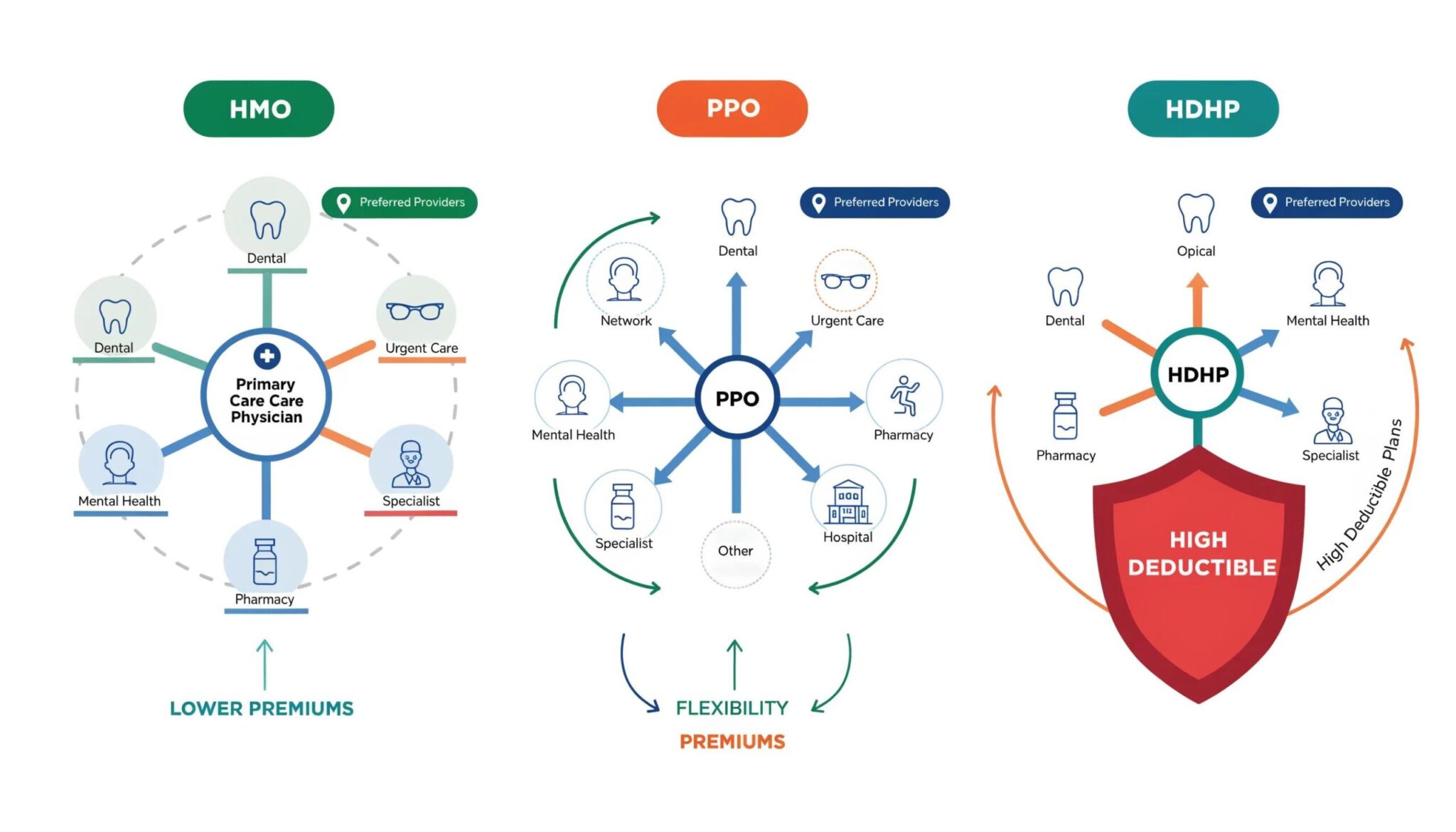
When evaluating group health insurance options, it’s essential to compare the unique features and costs of different plans. For a comprehensive understanding of the available options, visit our main page on group health insurance.
- HMO Plans: Generally, these plans offer lower premiums but less flexibility regarding provider choice.
- PPO Plans: While PPOs may come with higher costs, they provide greater flexibility when choosing healthcare providers.
- High Deductible Health Plans (HDHPs): These plans typically have lower monthly premiums but come with higher out-of-pocket costs before coverage kicks in.
Average monthly costs per employee in Michigan range from $500 to $800, depending on the plan type. Understanding these differences helps employers select the most suitable option based on their workforce’s employee benefits.
What Are the 2026 Cost Trends and Projections?
Looking ahead to 2026, projections suggest that average group health insurance premiums will continue to rise moderately due to increasing healthcare expenses and broader economic factors. The estimated average annual premium per employee is projected to reach approximately $8,000 statewide, with variations depending on group size and region. Employers should anticipate a range of increases from 4% to 7% annually, influenced by claims trends and healthcare inflation. These forecasts underscore the importance of proactive cost management and strategic benefit planning to mitigate the financial impact on both employers and employees.
Cost-Sharing Strategies for Michigan Employers
To balance affordability and coverage quality, Michigan employers employ several cost-sharing approaches. Expanding on traditional methods, these strategies support sustainable health benefits and offer financial predictability:
- Premium Sharing: Employers typically cover between 70% to 85% of monthly premiums, with contribution levels often scaled relative to business size and plan selection.
- Out-of-Pocket Maximums: Setting defined employee out-of-pocket expense caps fosters financial certainty and safeguards employee budgets against high medical costs.
- Tiered Contributions: Differentiated premium contributions based on employee classification, such as full-time, part-time, or salaried versus hourly, align costs more closely with usage and eligibility.
- Incentive Programs: Implementing premium discounts or enhanced employer contributions linked to employee participation in wellness or preventive care programs encourages healthier lifestyles and reduces claims.
- Health Savings Accounts (HSAs): Pairing high-deductible plans with employer contributions to HSAs helps employees manage out-of-pocket expenses while providing tax advantages.
- Flexible Spending Accounts (FSAs): Enabling employees to allocate pre-tax earnings towards medical expenses provides cost relief and increases affordability.
These expanded approaches empower employers to tailor cost-sharing to their workforce’s needs, promoting engagement and long-term benefit sustainability.
How Do Group Health Insurance Costs Impact Businesses and Employees?
The rising costs of health insurance significantly affect both employers and employees. Businesses often face budget constraints as they grapple with increasing premiums, which can vary from 50% to 90% of the total premiums covered by employers. This cost pressure can impact employee retention and job satisfaction, with an estimated average annual premium in 2026 projected at approximately $8,000 per employee. Employers must balance providing quality health coverage with managing expenditures, underscoring the importance of strategic planning in their benefits offerings.
What Strategies Can Effectively Manage Group Health Insurance Costs?

Effectively managing group health insurance costs requires a multi-faceted approach:
- Negotiating with Providers: Employers can seek to negotiate better rates and terms with insurance carriers to lower overall costs.
- Implementing Wellness Programs: Promoting employee health can lead to reduced claims and potentially lower insurance costs, though the effect is strongest where a program targets conditions already present in the group rather than general fitness.
- Regular Plan Reviews: Conducting frequent assessments of health plans ensures that the chosen options remain aligned with the organization’s goals and employees’ needs.
By utilizing these strategies, companies can mitigate financial burdens while enhancing the overall effectiveness of their health benefits.
What Resources Are Available for Cost Comparisons?
Employers looking for insights into health insurance costs can leverage various resources for effective plan selection. You can also explore options like QSEHRA and ICHRA for different coverage approaches.
- Online Insurance Comparisons: There are numerous platforms that allow employers to compare different plans and their respective costs easily.
- Consulting with Brokers:Engaging health insurance brokers can provide personalized advice and access to multiple plans that might suit the business’s needs.
- Local Industry Associations: Participating in industry associations often provides valuable networking opportunities and shared insights among peers navigating similar challenges.
These resources establish a foundation for informed decision-making when choosing health coverage.
National Benchmarks for Group Health Insurance Costs
Understanding national benchmarks for group health insurance costs provides context for evaluating your organization’s expenses. Current average rates vary across states, highlighting the importance of regional considerations in policy selection. Benchmarks are typically determined based on demographic factors, coverage levels, and overall market trends. Employers must continually assess these benchmarks to ensure that their offerings remain competitive within their respective industries.
Cost-Sharing Models in Group Health Insurance
Cost-sharing models play a critical role in shaping how expenses are distributed among employees and employers. Common models include fully-insured, self-funded, and level-funded plans:
- Fully-Insured Plans: Average monthly costs per employee range from $500 to $800.
- Self-Funded Plans: Often a more flexible option where employers take on the risk, averaging $400 to $650 per employee.
- Level-Funded Plans: Provide predictable costs while still allowing employers to retain potential savings based on claims experience.
These diverse models highlight strategic choices available to employers in structuring their group health plans.
Key Cost Drivers of Group Health Insurance
Identifying the main cost drivers of group health insurance is vital for effective financial management. Understanding these drivers enables employers to make well-informed decisions regarding their health benefit strategies.
- Demographics: The age and health status of employees heavily influences premiums, with older and less healthy populations typically facing higher rates.
- Claims History:An organization’s previous claims experience can affect renewal rates and terms for each subsequent coverage period.
- Market Trends: Trends in the healthcare market, such as shifts in technology or changes in policy, can also drive cost variations.
These drivers enable employers to make well-informed decisions regarding their health benefit strategies.
Strategies to Manage Group Health Insurance Expenses
Employers must adopt a proactive approach to manage expenses associated with group health insurance. For comprehensive support with various insurance needs, including dental and vision, consider available resources.
- Negotiation Tactics: Seek favorable terms from insurers and plan providers, leveraging group purchasing power.
- Wellness Program Implementation: Invest in employee wellness programs that can demonstrate a clear return on investment through decreased claims.
- Utilization of Technology: Employ technology solutions that streamline administrative tasks and improve overall health management within the workforce.
By integrating these tactics, businesses can enhance the sustainability of their health coverage while optimizing financial outcomes.
Have a Renewal Coming Up?
Send us your renewal and we will tell you whether the increase is competitive. We review it at no cost, and you only need four documents.
Send Us Your RenewalGlossary of Terms
This glossary provides definitions for key insurance terms commonly used in group health insurance discussions. Definitions are adapted from trusted sources including the Kaiser Family Foundation (KFF) and the Michigan Department of Insurance and Financial Services (DIFS).
Contact Us
For any specific inquiries or to discuss your needs further, feel free to reach out to us.
Frequently Asked Questions (FAQ)
What are the average costs of group health insurance for Michigan employers based on group size?
Average annual costs vary by group size in Michigan: small groups of 1-50 employees typically pay around $8,900 per employee, groups ranging from 51-150 employees average $7,800, 151-500 employees see about $7,000, and groups over 500 employees approximately $6,800 per employee annually. These figures reflect regional variations and economies of scale.
How do regional differences within Michigan affect group health insurance premiums?
Premiums vary across major regions due to factors like local healthcare costs and provider networks. For example, Detroit Metro Area premiums average $9,200 annually per employee, while Lansing averages $8,000. Employers should consider these regional benchmarks when selecting plans to optimize cost-effectiveness.
What cost-sharing strategies are most effective for Michigan employers?
Effective strategies include premium sharing where employers cover 70-85% of premiums, setting out-of-pocket maximums to control employee expenses, tiered contributions based on employment status, incentive programs tied to wellness participation, and providing Health Savings Accounts (HSAs) and Flexible Spending Accounts (FSAs) for tax-advantaged medical expense management.
How can HR teams ensure compliance with Michigan health insurance regulations while managing costs?
HR teams should stay informed about Michigan’s specific health insurance mandates and regional market conditions. Key steps include:
- Regularly reviewing plan documents for compliance with state and federal requirements.
- Engaging with knowledgeable brokers or consultants familiar with Michigan regulations.
- Educating employees about coverage benefits and cost-sharing structures.
- Implementing compliant wellness and incentive programs.
- Documenting all cost-sharing policies and contribution formulas meticulously.
What actionable steps can HR take to optimize group health insurance costs?
HR teams can:
- Conduct thorough market and regional premium comparisons annually.
- Negotiate directly with insurers and explore multiple plan options (HMO, PPO, HDHP).
- Promote employee participation in wellness programs to reduce claims.
- Leverage technology for benefits administration and monitoring utilization.
- Communicate clearly about cost-sharing models and benefit changes to ensure employee understanding and engagement.
Are there specific Michigan-focused examples of managing group health insurance costs?
The approaches that hold up in Michigan are structural rather than local. Tiered contribution strategies, where the employer share differs by employee class or coverage tier, move more money than most plan design changes — though classes must be defined consistently and applied to everyone in them. Pairing a high-deductible plan with an employer HSA contribution lowers premium while giving employees a tax-advantaged account, and it works on federal rules; there is no separate Michigan HSA regime, and Michigan follows federal adjusted gross income, so contributions excluded federally are excluded for state purposes too. One caution on rate negotiation: in the small group market rates come from the carrier’s filed tables, so no broker negotiates your rate down. What a market check does is find which carrier has filed more favorably for a group of your age mix in your county, which is a real difference and a different claim.
Frequently Asked Questions About Group Health Insurance Costs
What is the average cost of group health insurance per employee in Michigan?
According to employer benchmark surveys, the average annual cost of group health insurance is approximately $8,000 to $9,000 for single coverage and $23,000 to $25,000 for family coverage, with employers typically covering 70% to 80% of single premiums.
What factors influence employer health insurance premiums?
Key factors include group size, average workforce age, industry risk, geographic location, plan structure (deductible, copays, coinsurance), and carrier network type.
How can small to mid-sized businesses lower their health insurance costs?
Employers can lower costs by evaluating level-funded or self-funded plan designs, implementing Health Savings Accounts (HSAs) paired with high-deductible health plans (HDHPs), establishing Health Reimbursement Arrangements (HRAs), and working with an independent broker to negotiate carrier rates.
Unhappy with your current broker? Switch to CFH. Your employees won’t notice. You will.
Related Guides
Service Areas
Employee benefits guidance for employers in every region of Michigan we serve.
Small Group Health Insurance Guide for Michigan Employers (2 to 50 Employees)
How small group health insurance works in Michigan and how to compare your options.
Employer Benefits Guides: Eligibility, Plan Design, Life Events and Rules
Our library of plain-English guides on eligibility, plan design and compliance.
