

By CFH Insurance Consultants, CFH Insurance Consultants
Navigating the landscape of health insurance can be daunting for employers in Michigan, especially with the variety of plans available. This comprehensive guide explores the best health insurance options tailored for Michigan employers, providing insights into different types of group health insurance, costs, coverage features, and the essential factors to consider when selecting a provider. By understanding these elements, employers can make informed decisions that not only comply with state regulations but also meet the diverse health needs of their workforce.
As we delve into specific types of plans and their benefits, this article aims to shed light on how appropriate health insurance can boost employee satisfaction and retention, while ultimately contributing to the overall productivity of the organization. Additionally, this guide offers strategic insights into Michigan-specific regional networks, ACA compliance nuances, and practical tips for small-to-medium businesses to control premium costs effectively.
10 min read
Types of Group Health Insurance Plans
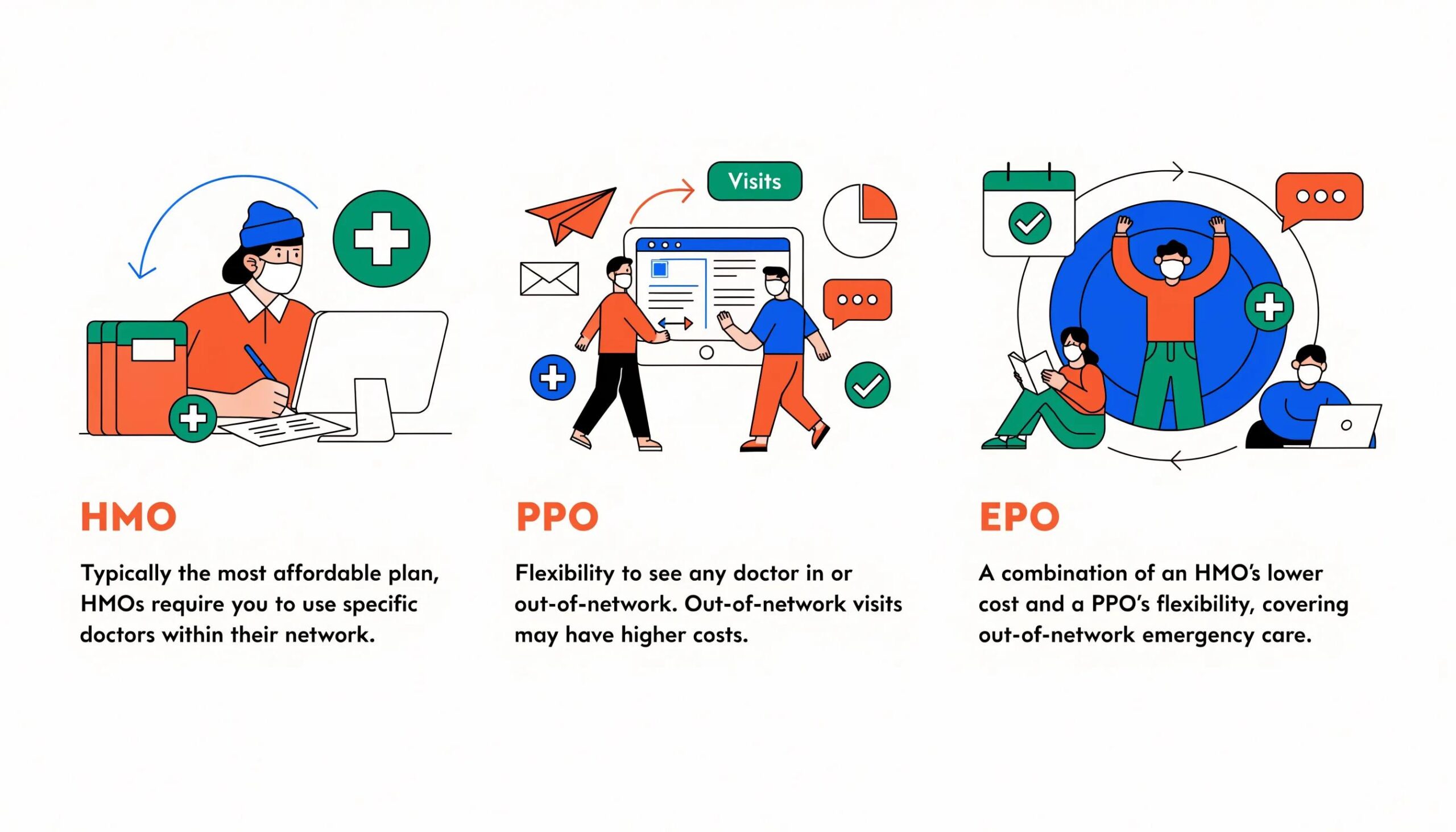
Employers in Michigan have several options regarding group health insurance plans, each with distinct features, benefits, and potential drawbacks. Selecting the right type of health insurance can significantly affect employee satisfaction and financial outcomes for the business. Below are the primary categories of group health insurance plans, along with their strategic advantages. For a deeper dive into available choices, employers can also refer to our newly optimized group health insurance costs guide.
Health Maintenance Organizations (HMOs)
HMOs require members to use a defined network of doctors and hospitals, focusing on coordinated care to control costs. They generally require referrals to see specialists.
Strategic Advantages:
- Cost-Effective Premiums: Lower monthly premiums due to managed care networks.
- Emphasis on Preventative Care: Encourages regular check-ups, reducing long-term expenses.
- Simplicity: Clear guidelines on providers and services reduce out-of-network surprises.
Considerations for Michigan Employers:
- Many Michigan HMOs have strong regional networks, particularly in metro Detroit and Grand Rapids.
- Employers should verify the provider network includes local preferred specialists.
Preferred Provider Organizations (PPOs)
PPOs offer a broad network and allow members to see any healthcare provider with or without referrals.
Strategic Advantages:
- Flexibility: Employees can access a wide range of specialists without referrals.
- Out-of-Network Coverage: Provides partial coverage for care outside the network.
Considerations for Michigan Employers:
- PPO premiums are typically higher than HMOs but may improve employee satisfaction due to freedom of choice.
- Networks often include large health systems like Henry Ford and Spectrum Health, vital for Michigan employers.
Exclusive Provider Organizations (EPOs)
EPOs blend benefits of HMOs and PPOs by offering no referral requirements but limited to network providers.
Strategic Advantages:
- Cost-Savings: Lower premiums than PPOs with streamlined networks.
- No Out-of-Network Coverage: Limits unexpected costs while maintaining flexibility within the network.
Considerations for Michigan Employers:
- EPO networks tend to focus on key Michigan regions; verify availability for remote or rural employees.
High Deductible Health Plans (HDHPs) with Health Savings Accounts (HSAs)
HDHPs combine lower premiums with higher deductibles, paired with tax-advantaged HSAs to help employees save for medical expenses.
Strategic Advantages:
- Premium Savings: Reduced monthly premiums free up budget for other benefits.
- Consumer Engagement: HSAs encourage employees to manage healthcare spending wisely.
- Tax Benefits: Both employers and employees benefit from tax-deductible HSA contributions.
Considerations for Michigan Employers:
- Increasingly popular in Michigan, but employees should be educated about out-of-pocket responsibilities.
- Employers may contribute to HSAs as an incentive.
Alternative Funding Models: Level-Funded and Self-Insured Plans
Self-Insured Plans
Employers assume the financial risk directly by paying claims as they arise rather than paying premiums to an insurer.
- Advantages: Greater control over plan design and potential cost savings for stable, medium to large groups.
- Risks: Exposure to high claim costs; stop-loss insurance is essential to mitigate risk.
Have a Renewal Coming Up?
Send us your renewal and we will tell you whether the increase is competitive. We review it at no cost, and you only need four documents.
Send Us Your RenewalLevel-Funded Plans
These plans blend self-insurance and fully insured approaches by charging a fixed monthly fee to cover claims, administration, and stop-loss protection.
- Advantages: Predictable cash flow with opportunity for refunds if claims are lower than expected.
- Considerations: Can be suitable for small-to-mid-sized businesses seeking cost stability.
Health Reimbursement Arrangements (HRAs) for Michigan Employers
HRAs provide an innovative way for employers to reimburse employees for qualified medical expenses, including health insurance premiums, offering flexibility and tax advantages. health and benefits consulting for michigan employers
Individual Coverage Health Reimbursement Arrangement (ICHRA)
ICHRA allows employers to reimburse employees tax-free for individual health insurance premiums and other medical expenses.
- Benefits for Employers: Customizable contribution amounts, scalability for different classes of employees, and relief from offering group coverage.
- Benefits for Employees: Choice in selecting their own health plan tailored to individual needs.
Qualified Small Employer Health Reimbursement Arrangement (QSEHRA)
QSEHRA is designed for small employers who don’t offer group health insurance, allowing them to reimburse employees for qualified medical expenses up to a capped amount. To learn more about this option, check out our detailed what is QSEHRA guide.
- Employer Advantages: Predictable expenses with capped reimbursements and simplified administration.
- Employee Advantages: Tax-free reimbursements up to predefined limits to offset healthcare costs.
Both ICHRA and QSEHRA plans help Michigan employers provide flexible health benefits while managing costs effectively.
Michigan Regional Networks and Compliance Considerations
Michigan employers must consider regional network coverage when selecting plans to ensure accessibility for employees statewide. Major systems like Henry Ford, Beaumont, Spectrum Health, and McLaren Health Care form core networks across the state.
Compliance Requirements:
- Affordable Care Act (ACA) Affordability Thresholds: Plans must meet minimum value and affordability standards to avoid penalties.
- Michigan State Mandates: Employers must comply with state-specific regulations regarding coverage and employee notifications.
- Notice and Reporting: Employers need to provide required notices (e.g., ACA Notices, Summary of Benefits) to employees.
Controlling Premium Costs for Small-To-Medium Businesses
Here are actionable tips for Michigan small-to-medium businesses to manage premium costs while providing quality coverage:
- Shop and Compare: Regularly request quotes from multiple carriers and brokers to leverage competitive pricing.
- Utilize Level-Funded or HDHP Models: Consider plans that balance premium savings with financial predictability.
- Promote Wellness Programs: Encourage health initiatives that can reduce claims by improving employee health. For more on the impact and benefits, see our detailed guide on how wellness programs transform employee benefits.
- Flexible Spending Accounts (FSAs) and HSAs: Integrate tax-advantaged accounts to reduce employee taxable income and out-of-pocket expenses.
- Employee Education: Educate employees on cost-effective plan utilization to reduce unnecessary claims.
- Review Plan Designs: Adjust deductibles, co-pays, and network options annually to optimize costs.
Coverage Features
When evaluating health insurance plans, employers should consider various essential features that may affect employee satisfaction and profitability. The following table summarizes some standard coverage features across different types of health insurance plans.
Costs
Understanding health insurance costs is crucial for Michigan employers. The overall cost of health insurance can vary greatly depending on the type of plan, the size of the employer group, and the demographics of the workforce. Employers often face several costs, such as premiums, employee contributions, and out-of-pocket expenses for employees.
Key cost components include:
- Premiums: Monthly payments to insurers or self-insured administration.
- Employee Contributions: Portion of premiums paid by employees.
- Deductibles and Co-Pays: Out-of-pocket expense levels before and during care.
- Stop-Loss Insurance (for self-funded): Insurance to protect against catastrophic claims.
Regularly reviewing and comparing plans can help identify opportunities for cost savings while maintaining quality coverage.
Factors to Consider When Selecting Insurance Providers
Choosing the right insurance provider involves several key considerations that can significantly impact employee satisfaction and business outcomes. Employers should evaluate factors such as:
- Workforce Needs: Assessing the health care needs of employees to provide suitable coverage options.
- Plan Variability: Understanding different plans to offer a variety of choices to employees based on individual healthcare needs.
- Costs and Premiums: Evaluating the overall cost while factoring in employee contributions, deductibles, and out-of-pocket expenses.
- Provider Network: Ensuring the plan offers a comprehensive network of healthcare providers that meet employee preferences and needs.
- Customer Service and Support: Analyzing the support and resources available from the insurance provider, such as dedicated account representatives.
For employers looking to better understand their options and the potential benefits across various group health insurance, exploring detailed plan structures is essential.
The Best Health Insurance Options for Michigan Employers: A Comparison
This table compares the key features, considerations, and best use cases for the top health insurance options available to Michigan employers, focusing on Level-Funded plans, HRAs (ICHRA and QSEHRA), and HDHPs with HSAs.
Benefits of Offering Health Insurance
Providing health insurance comes with numerous benefits for employers. These include:
- Increased Employee Satisfaction: Access to quality health care supports overall employee wellness and improves job satisfaction.
- Attraction and Retention: Competitive health benefits help attract and retain top talent in a competitive labor market.
- Enhanced Productivity: Healthier employees are more productive, which can contribute to the company’s bottom line.
- Reduced Absenteeism: Providing health insurance often leads to healthier employees who take fewer sick days, promoting workplace continuity.
Offering comprehensive benefits, including employee benefits, plays a crucial role in attracting and retaining valuable talent. Employers should also consider supplementing core health coverage with life and disability insurance for employees to provide additional security for their workforce.
Group Health Insurance Options
Employers in Michigan can choose from several group health insurance plans that differ in terms of coverage, premiums, and features. Here’s a comparative summary of the options available:
- HMO: Lower costs with a limited network of providers and referral requirements. Well-suited for companies wanting cost control and structured care.
- PPO: Flexibility to choose providers without referrals, often with higher costs. Favored by employees valuing choice and access.
- EPO: A middle ground between HMO and PPO, with no referrals but a restricted network. Balanced option for control and flexibility.
- HDHP with HSA: Lower premiums, paired with HSAs, leading to higher out-of-pocket costs. Ideal for cost-conscious employers and employees.
- Fully Insured: Predictable costs with the insurer assuming all risk. Suitable for small employers seeking stability.
- Self-Insured: More control over spending, suited for larger companies with stable health care needs. Potential for cost savings and plan customization.
- Level-Funded: Fixed costs with potential refunds based on claim levels. Good for mid-size employers wanting balance of cost control and risk mitigation.
Key Providers in Michigan
Several key health insurance providers dominate the Michigan marketplace, each with unique offerings. Here’s a brief overview of some major providers:
- Blue Cross Blue Shield of Michigan: Offers a wide range of plans, including HMO, PPO, and EPO options, with a strong provider network across the state.
- Priority Health: Known for their competitive pricing and quality customer service, offering various health plans for different needs.
- Health Alliance Plan: Focuses on comprehensive service with personal health management options and a robust network.
- UnitedHealthcare: Provides a variety of options, including fully insured and self-insured plans, tailored for businesses of all sizes.
In addition to core health coverage, employers may also consider supplemental benefits such as dental and vision insurance for employees to offer a more complete benefits package.
This overview equips employers in Michigan with essential insights to make informed decisions about health insurance plans for their employees. By emphasizing comprehensive coverage that meets workforce needs, employers can foster a healthier and more productive workplace environment.
For specific questions or to discuss tailored solutions, employers can contact providers to understand how plans like QSEHRA and ICHRA might fit their needs.
Questions We Get
The questions employers ask us most are answered in full on our resources page.
Frequently Asked Questions
What health insurance options do Michigan employers have?
Fully insured group plans, level-funded plans and self-funded plans, plus individual coverage arrangements such as ICHRA.
How do we choose between them?
Compare cost, risk, flexibility and administrative burden against your group’s size, claims and goals.
Which carriers operate in Michigan?
Blue Cross Blue Shield of Michigan, Blue Care Network, Priority Health, HAP and others, with options varying by county and group size.
Can we change plans mid-year?
Usually only at renewal, unless a qualifying event applies. Plan changes are best prepared months ahead.
Unhappy with your current broker? Switch to CFH. Your employees won’t notice. You will.
Also from CFH: Healthcare Compliance for Employers in Michigan: Essential Regulations and · Employee Benefits Consulting in Michigan: A Complete Guide for Employers · How to Choose the Right Group Health Insurance Plan for Your Business
Related Guides
Small Group Health Insurance Guide for Michigan Employers (2 to 50 Employees)
How small group health insurance works in Michigan and how to compare your options.
Fully Insured, Level-Funded and Self-Funded Plans Compared
The trade-offs between fully insured, level-funded and self-funded health plans.
Employer Benefits Guides: Eligibility, Plan Design, Life Events and Rules
Our library of plain-English guides on eligibility, plan design and compliance.
Domestic Partner Health Insurance for Employers
Covering an employee’s domestic partner is a plan design decision, not a legal requirement, and it carries a payroll tax rule that is easy to miss…
