
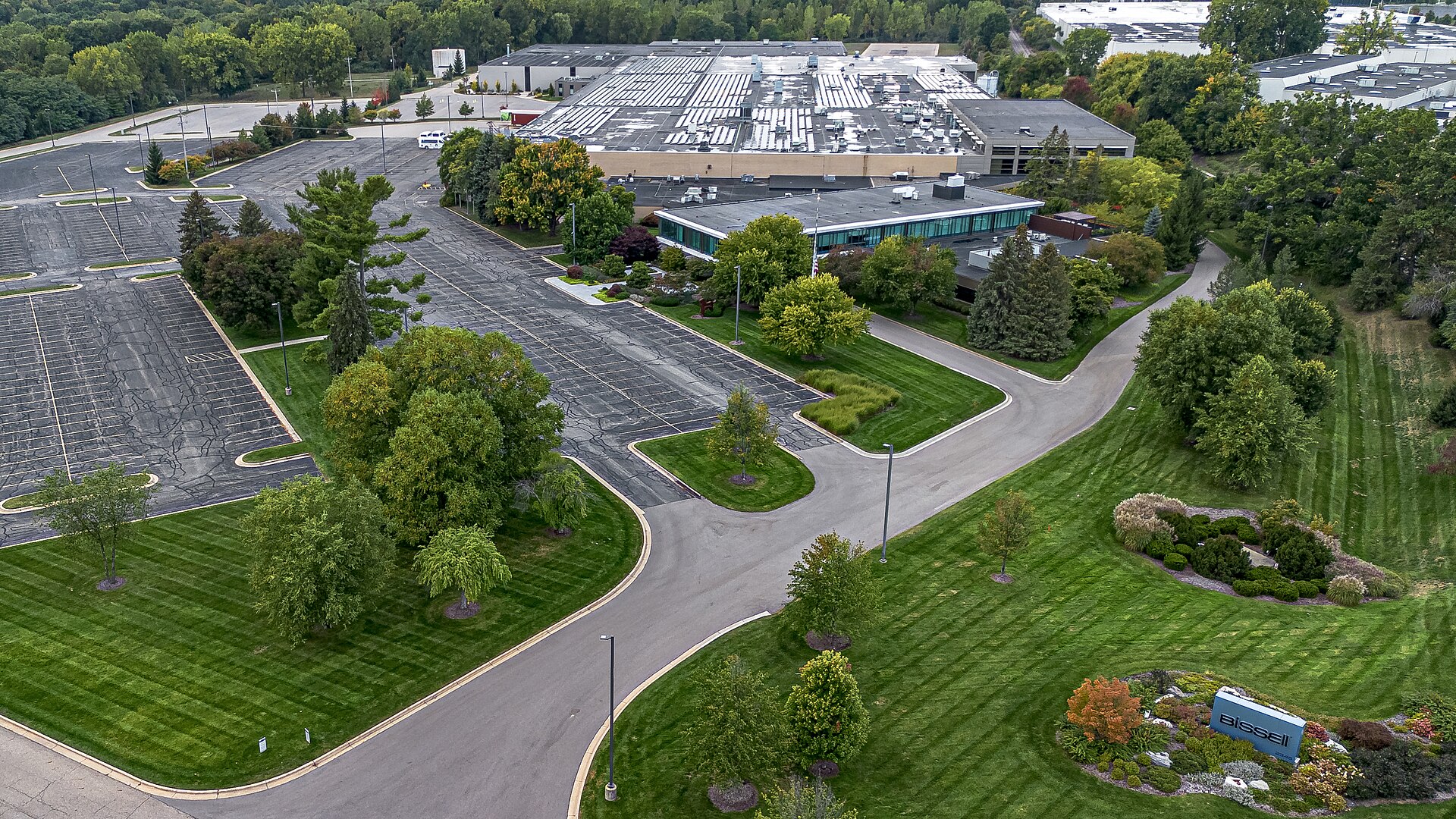
A city of about 25,900 with an outsized employer base
The Census Bureau put Walker at 25,881 residents as of July 1, 2025 — a city of that size would not normally anchor two global headquarters and a Tier 1 automotive manufacturer, but Walker does.
Among Walker residents who work, manufacturing is the single largest sector, followed by health care and retail. Production occupations alone account for roughly one in ten employed residents. That mix is why a benefits strategy copied from a white-collar Grand Rapids firm tends to fail here: the plan has to price and communicate to shift workers, and it has to hold up for a corporate population at the same time.
What we actually do for Walker employers
Self-funded and level-funded analysis
For a manufacturer with 75 to 500 employees, the question is whether you are subsidizing a carrier’s margin. We model it against your own claims, not an industry average.
Two-population plan design
Office and plant populations use health care differently. We design around that — contribution tiers, network fit, and site-of-care steering — instead of averaging them into one mediocre plan.
Enrollment that reaches the floor
Shift-based enrollment, printed materials, and on-site sessions timed to shift change. A portal-only rollout leaves production employees behind every year.
Renewal defense
We take the renewal apart before you see it: claims drivers, stop-loss laser review, large-claimant trend, and what the carrier is actually charging you for.
Where Walker employees get care
There is no hospital inside Walker city limits. Employees route to Grand Rapids and Wyoming: Corewell Health Butterworth Hospital on the Medical Mile is the large acute-care destination, Helen DeVos Children’s sits alongside it, Blodgett is in East Grand Rapids, and University of Michigan Health-West on Byron Center Avenue in Wyoming is the closest non-Corewell hospital.
Related: how we help employers improve workforce health and control healthcare costs all year, not just at renewal.
That matters for network selection. A narrow network that excludes one of those systems will be fine for part of your workforce and a problem for the rest, depending on where people actually live. We map your census against network footprints before you commit, not after open enrollment.
Major Walker Employers
Meijer is headquartered at 2929 Walker Avenue NW. BISSELL runs its global headquarters from 2345 Walker Avenue NW. Challenge Manufacturing, an employee-owned (ESOP) Tier 1 automotive supplier, keeps its corporate headquarters plus three production plants in the city — on Fruit Ridge Avenue NW and Three Mile Road NW.
Add the retail and distribution employment along the Alpine Avenue and Lake Michigan Drive corridors and you get Walker’s real benefits profile: corporate HQ populations with sophisticated plan expectations, ESOP-owned manufacturing where employees are also owners, and hourly retail and logistics staff where ACA measurement and affordability testing do the heavy lifting.
If you are the third kind of employer — the 40-to-400-life company that is not one of the three names above — you are competing with them for the same workers. That is a benefits problem before it is a wage problem.
Frequent Questions for Walker Owners
Do you work with manufacturers in Walker?
Yes. Manufacturing is the largest employment sector for Walker residents, and Tier 1 automotive supply is a significant part of the local base. We work regularly with plants in the 75 to 500 employee range on self-funded and level-funded arrangements, stop-loss placement, and plan designs that hold up for production employees.
Which hospitals do Walker employees typically use?
There is no hospital in Walker itself. Most employees use Corewell Health Butterworth Hospital and Helen DeVos Children’s Hospital in Grand Rapids, Corewell Health Blodgett Hospital in East Grand Rapids, or University of Michigan Health-West in Wyoming. Because two separate health systems serve the area, network choice has a real effect on which of your employees keep their current doctors.
How does an ESOP change benefits planning?
Employee ownership does not change your ACA obligations or your ERISA fiduciary duties, but it does change the conversation. Employee-owners tend to engage with cost as a shared problem rather than an imposition, which makes transparency about claims trend and plan design tradeoffs far more productive than it is elsewhere.
How small is too small to consider self-funding?
Level-funded arrangements are realistic from roughly 25 employees up, and true self-funding usually starts to make sense somewhere north of 75 to 100, depending on your claims history and risk tolerance. The honest answer is that it depends on your own numbers, which is what the renewal review is for.
Is there a charge for reviewing a Walker plan?
No. We look at your current plan, your renewal, and your claims experience if you have it, and we tell you what we see. If we do not think we can improve on what you have, we say that.
One plan trying to serve the office and the floor? Ask about switching to CFH.
Get a Second Read on Your Walker Renewal
We will tell a Walker employer which changes are worth making and which parts of the plan to keep. The review is free and does not obligate you to move.
Start the Review Email info@cfhic.com Call 248.370.8853
An independent employee benefits consulting firm. We look at the entire benefits program — cost, plan performance, risk and administration.
Bloomfield Hills, MI 48304
248.370.8853
Colorado Springs, CO 80921
719.425.2649
Houston, TX 77084
281.404.5670
Related Guides
Service Areas
Employee benefits guidance for employers in every region of Michigan we serve.
Small Group Health Insurance Guide for Michigan Employers (2 to 50 Employees)
How small group health insurance works in Michigan and how to compare your options.
Employer Benefits Guides: Eligibility, Plan Design, Life Events and Rules
Our library of plain-English guides on eligibility, plan design and compliance.
