

Contact CFH Insurance Consultants Today
Group Health Captives for Michigan Employers: How Medical Captives Lower Healthcare Costs
By CFH Insurance Consultants
Executive Summary: Why Michigan Middle-Market Employers Are Turning to Group Health Captives
Michigan employers with 50-500 employees are facing unprecedented challenges in managing healthcare expenses. Premiums have risen steadily rather than dramatically in aggregate — KFF put the 2025 increase at 5% for single and 6% for family coverage, and 26% cumulatively over five years — but an individual employer’s renewal can land far above that average, driven by rising healthcare costs and insurer profit retention, while providing limited claims transparency and flexibility.
In response, many mid-market Michigan businesses are transitioning from fully insured plans to self funded health insurance captive models, specifically medical stop loss captives. These innovative solutions enable employers to collectively pool risks and leverage group health captives Michigan programs to improve cost control, gain ownership over claims data, and increase financial predictability.
This comprehensive guide explores how group health captives function, their advantages over traditional models, key cost containment strategies, feasibility criteria for employers, and critical regulatory considerations.
How a Medical Stop Loss Captive Works: Understanding the Three-Tier Funding Architecture
A medical stop loss captive utilizes a layered funding approach to distribute risk and optimize protection for participating employers. This three-tier system balances risk retention with external reinsurance, ensuring stable financial outcomes.
This tiered funding model provides balance by maximizing cost savings and financial predictability while significantly reducing exposure to catastrophic claims. Employers benefit from shared risk management and potential captive dividends when claims experience is favorable.
Comparing Group Health Captives Michigan, Fully Insured, and Traditional Standalone Self-Funding Models
Level funding is the option most often weighed against a captive by employers in the 25 to 250 employee range, and it is absent from the table below. For that head-to-head specifically — capital at risk, commitment length, transparency and what it costs to exit — see medical stop-loss captive vs level-funded.
Michigan employers evaluating options should understand key differences across these healthcare funding strategies. The table below highlights critical factors that influence plan effectiveness and financial outcomes.
Key Cost-Containment Strategies Inside a Group Health Captive
Michigan employers participating in group health captives implement various innovative strategies to manage medical costs effectively within their captive frameworks.
- Unbundled Pharmacy Benefit Managers (PBMs) with Pass-Through Pricing: Ensures transparent drug costs by eliminating typical PBM rebates and spread pricing.
- Reference-Based Pricing (RBP): Caps reimbursements for medical services based on fair market rates rather than billed charges, controlling inflated pricing.
- Direct Primary Care (DPC) Integration: Offers employees unlimited access to primary care providers for a fixed fee, reducing reliance on costly urgent and emergency services.
- Specialty Drug Carve-Outs: Segregates high-cost therapies such as GLP-1 medications and gene therapies to specialized vendors for better management and cost negotiation.
- Medical Management Programs: Includes utilization review, case management, and wellness initiatives to improve care quality and reduce inappropriate spending.
Feasibility, Employer Requirements & Joining Criteria for Group Health Captives in Michigan
Not all employers are immediately eligible for participation. Captive sponsors generally evaluate several critical factors:
- Minimum Employee Size: Typically 50-75 enrolled lives to ensure statistical credibility and risk diversification.
- Claims History: 24-36 months of stable and predictable claims loss ratios.
- Financial Stability: Sufficient liquidity and credit to support claims funding obligations.
- Cultural Commitment: Willingness to engage in wellness programs, risk management, and captive governance processes.
- Captive Structure: Homogeneous groups (similar industries) may foster easier underwriting, while heterogeneous groups increase risk diversification benefits but require stronger governance.
Employers meeting these criteria improve their likelihood of acceptance and successful captive participation.
Fiduciary, Legal & Regulatory Considerations for Michigan Businesses
Operating a medical stop loss captive within Michigan requires vigilant compliance with applicable laws and fiduciary responsibilities:
- Employee Retirement Income Security Act (ERISA): Governs plan administration, fiduciary duties, and participant rights.
- Form 5500 Filings: Required annual disclosure of employee benefit plan information.
- Michigan Insurance Code: State-specific provisions that regulate insurance captives and self-funded arrangements.
- Consolidated Appropriations Act (CAA) Gag Clause and Fee Transparency: Recent federal mandates requiring transparency into fees charged by PBMs and healthcare vendors.
Employers should consult with knowledgeable counsel and fiduciary benefits advisors to ensure adherence to all regulatory mandates and protect plan assets.
Frequently Asked Questions (FAQ) About Medical Stop Loss Captives
What happens during high-claims years in a medical stop loss captive?
When claims exceed expected levels, the captive absorbs losses up to the pooled risk limit. Excess claims beyond the aggregate stop-loss reinsurance layer are covered by reinsurers, protecting the captive’s solvency. Captive losses may reduce or eliminate annual profit dividends but are balanced over time through risk pooling.
How are captive profit distributions and dividends calculated and taxed?
Dividends are typically calculated based on surplus funds remaining after claims, administrative expenses, and reinsurance costs. They are distributed proportionally to employer contributions. Tax treatment varies, but dividends are generally considered a reduction in plan costs rather than taxable income; employers should consult tax advisors.
How long does the underwriting and onboarding process take for Michigan employers?
The underwriting process generally takes 45-90 days, depending on the complexity of claims history and employee demographics. Onboarding includes data submission, plan design review, and captive governance orientation.
What is the difference between single-parent and group medical captives?
Single-parent captives are established by one employer to self-insure their risks, while group medical captives pool multiple employers sharing risk. Group captives enable greater risk diversification and collective cost control.
Can an employer exit a captive program without penalty?
Exit provisions vary by captive agreement. Typically, employers must provide advance notice and may be subject to financial reconciliation based on claims experience and captive obligations to ensure equitable cost allocation.
Strategic Advisory & Next Steps for Michigan Employers
Transitioning to a self funded health insurance captive model is a complex but potentially rewarding strategy for managing healthcare costs. Partnering with an independent fiduciary benefits advisor like CFH Insurance Consultants can streamline evaluation and implementation.
- Conduct a feasibility analysis tailored to your workforce and claims history.
- Understand captive program options and select the structure aligned with your goals.
- Navigate legal and regulatory compliance requirements.
- Implement cost-containment initiatives within the captive framework.
- Engage employees to maximize participation and wellness outcomes.
Contact CFH Insurance Consultants today to explore how group health captives Michigan and medical stop loss captives can optimize your healthcare benefits strategy and reduce costs sustainably.
Integration of Self-Funded Plans with Other Employee Benefits
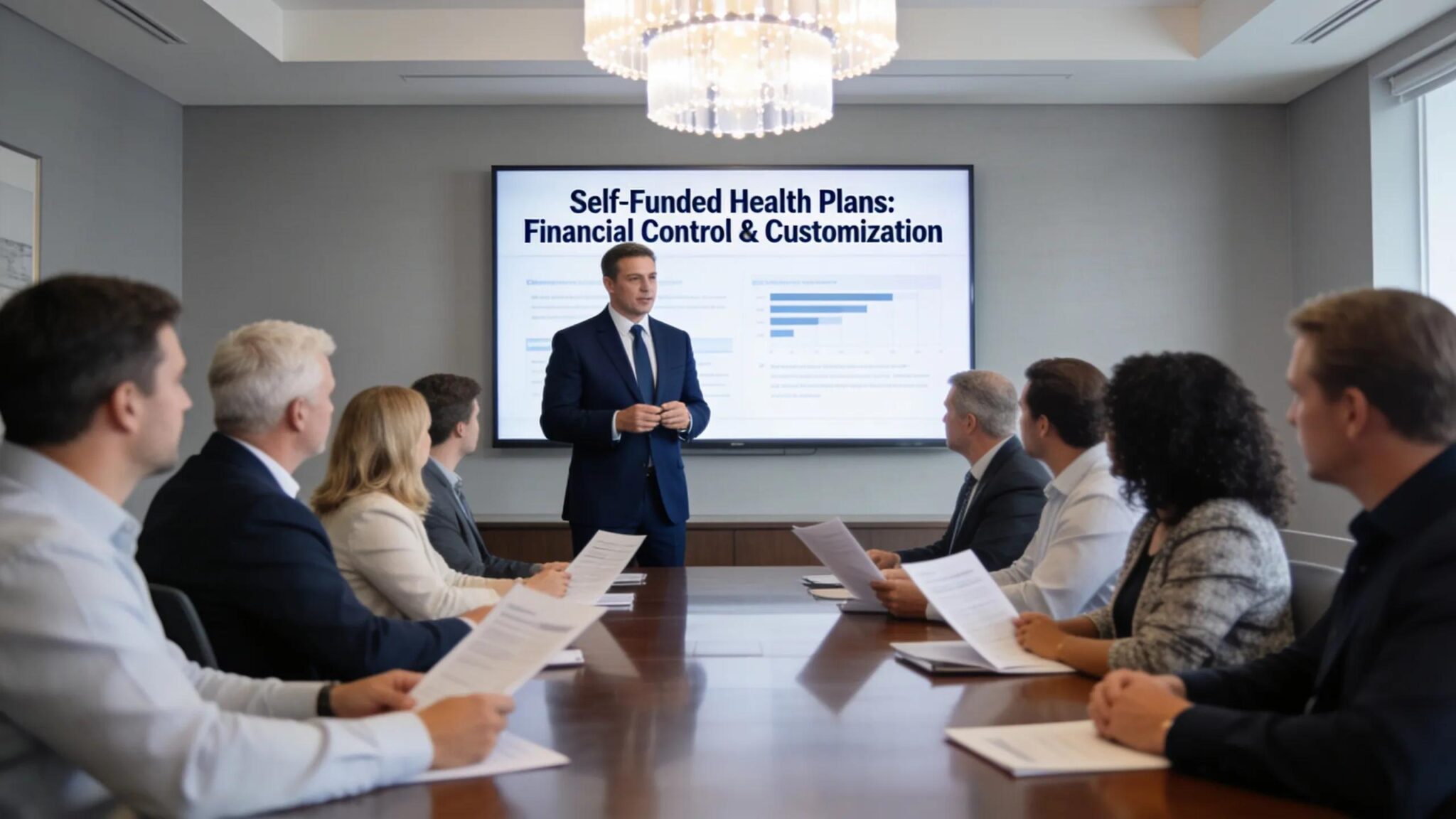
Beyond medical coverage, self-funded health insurance captives allow employers to combine dental, vision, and wellness programs into a unified benefits package. This integration creates economies of scale and streamlines administration, enhancing employee satisfaction. Telehealth services, chronic condition management, and behavioral health programs are often embedded to improve outcomes and curtail high-cost claims.
How Medical Stop-Loss Insurance Policies Lower Employer Healthcare Expenses
Stop-loss insurance is indispensable within the captive model for mitigating financial risk associated with self-funded plans. It assures employers that catastrophic claims will not create destabilizing costs.
The Vital Role of Stop-Loss Coverage in Group Health Captives

Stop-loss insurance empowers employers to confidently self-fund by transferring unpredictable, extraordinary claims risks to insurers. Its presence attracts employers to join captives by reducing volatility and underpinning sustainable cost savings.
How Stop-Loss Insurance Protects Against Unexpected High Claims
Stop-loss coverage functions by reimbursing claims costs exceeding negotiated thresholds, ensuring employer spending aligns with budget expectations. Key coverages include:
- Specific Stop-Loss: Protection for individual high-cost claims above the attachment point.
- Aggregate Stop-Loss: Protection against total claims exceeding expected aggregate limits over the policy period.
Effective Healthcare Cost Containment Strategies Using Group Captives
Employers in Michigan who leverage group health captives Michigan employ targeted strategies to maximize savings including:
- Level-Funded Plans: Predictable monthly payments based on estimates coupled with stop-loss protection for overages.
- Wellness Programs: Focus on prevention and chronic disease management to reduce claim incidence.
- Data Analytics: Use transparent claims data to identify cost drivers and refine plan design.
- Provider Network Optimization: Contract with providers based on value rather than volume.
- Employee Engagement: Incentivize healthy lifestyle choices and plan participation for better outcomes.
Financial Advantages and Savings Realization Through Captive Insurance Programs
Employers participating in medical stop loss captives realize financial benefits including:
- Return of Surplus: Excess reserves are redistributed as dividends, reducing net costs.
- Reduced Administrative Costs: Shared resources and direct contracting decrease overhead.
- Improved Cash Flow: Claims-based funding replaces upfront premium payments.
- Elimination of Insurer Profit Margin: Collective self-insurance removes markups, passing savings to members.
These advantages position captives as an effective long-term strategy for Michigan employers focused on sustainable healthcare expense management.
Regulatory Compliance Considerations for Group Health Captives in Michigan
Maintaining compliance with federal and state regulations is paramount. Employers must ensure adherence to:
- Affordable Care Act (ACA): Employer mandates on coverage and reporting.
- ERISA: Fiduciary responsibilities and benefit plan standards.
- Michigan Insurance Code: Captive specific oversight and licensing.
- Non-Discrimination Rules: Ensuring equitable benefit access.
- Transparency and Reporting: Timely disclosures to regulators and plan participants.
Professional guidance is vital to navigate legal complexities and optimize captive program advantages.
Take Action: Optimize Your Healthcare Costs with Group Health Captives
Are you a Michigan mid-market employer seeking to reduce healthcare costs while enhancing employee benefits? Discover how group health captives Michigan and self funded health insurance captives can transform your benefits strategy.
Contact CFH Insurance Consultants Now
Related Reading
Unhappy with your current broker? Switch to CFH. Your employees won’t notice. You will.
Also from CFH: Group health insurance in Big Rapids, MI · Employee Benefits for New Baltimore Waterfront Employers · Understanding Group Health Insurance Plans for Employees
