

11 min read
QSEHRA Grand Rapids: The Complete Small Business Health Insurance Guide for West Michigan Employers
Qualified Small Employer Health Reimbursement Arrangements (QSEHRA) offer a unique solution for small employers in Grand Rapids looking to provide health benefits to their employees. This guide will explore the eligibility requirements, benefits offered, and the enrollment process for QSEHRA, helping small businesses navigate this valuable small business health insurance Grand Rapids option. Many small employers face challenges in providing affordable health coverage, and QSEHRA presents a flexible and tax-advantaged way to support employee health needs. In this article, we will cover the overview of QSEHRA, eligibility requirements, benefits, implementation strategies, compliance considerations, and additional resources available for small employers.
Overview of QSEHRA Grand Rapids
QSEHRA is a health reimbursement arrangement designed specifically for small employers with fewer than 50 full-time equivalent employees. It allows these employers to reimburse employees for qualified medical expenses, including health insurance premiums. This arrangement provides flexibility compared to traditional group health insurance plans, enabling employers to tailor benefits to their employees’ needs. By offering QSEHRA, small businesses can enhance their employee benefits package while maintaining control over costs.
See also: Improving Health. Controlling Costs. Delivering Results., our approach for employers who want cost to move between renewals.
External sources further emphasize how QSEHRA empowers small employers to offer tax-exempt funds for employees to purchase health coverage on the individual market.
Eligibility Requirements for QSEHRA Grand Rapids
To qualify for QSEHRA, small employers must meet specific criteria. These include:
- Business Size: The employer must have fewer than 50 full-time equivalent employees.
- No Group Health Plan: The employer cannot offer a group health insurance plan to employees.
- Employee Participation: All eligible employees must be offered the QSEHRA benefit.
Understanding these eligibility requirements is crucial for small employers considering this health insurance option.
How QSEHRA Grand Rapids Small Businesses Use to Replace Group Health Insurance
QSEHRA provides several advantages for small employers and their employees, including:
- Flexibility for Employees: Employees can choose their health insurance plans, allowing them to select coverage that best fits their needs.
- Cost Control for Employers: Employers can set a fixed monthly reimbursement amount, making budgeting easier and more predictable.
- Tax Advantages: Contributions made by employers are tax-deductible, and reimbursements to employees are tax-free.
These benefits make QSEHRA an attractive option for small businesses looking to enhance their employee benefits without incurring significant costs.
Implementation Strategies

Implementing a QSEHRA involves several key steps:
- Drafting a Plan Document: Employers must create a written plan document outlining the terms of the QSEHRA.
- Notifying Employees: Employees must be informed about the QSEHRA and how it works.
- Establishing a Reimbursement Process: Employers need to set up a system for employees to submit their medical expenses for reimbursement.
By following these steps, small employers can successfully implement a QSEHRA and provide valuable health benefits to their employees.
Compliance Considerations
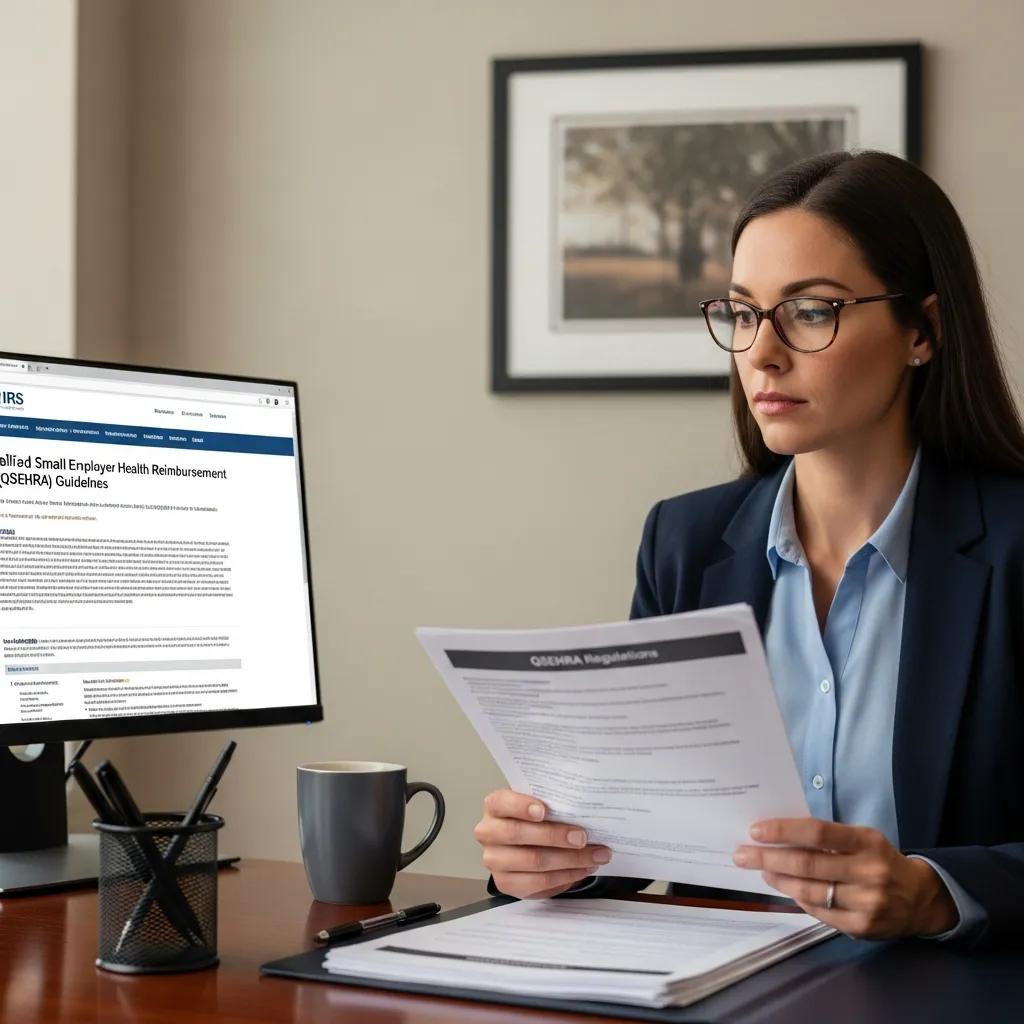
Compliance with QSEHRA regulations is essential for small employers. Key compliance requirements include:
- Written Notice Requirements: Employers must provide written notice to employees about the QSEHRA, including details about the benefits and reimbursement process.
- Qualified Medical Expenses: Employers must ensure that reimbursements are made only for qualified medical expenses as defined by the IRS.
- Annual Reporting Obligations: Employers are required to report QSEHRA contributions on employees’ W-2 forms.
Understanding these compliance considerations helps small employers avoid potential penalties and ensure the successful administration of their QSEHRA.
Additional Resources and Support
Small employers can access various resources to assist with QSEHRA implementation and management, including:
- Local Insurance Brokers: These professionals can provide guidance on setting up and managing QSEHRA.
- Online Tools and FAQs: Many websites offer tools and frequently asked questions to help employers understand QSEHRA better.
Utilizing these resources can simplify the process of implementing a QSEHRA and ensure compliance with regulations.
Small Business Health Insurance Grand Rapids: Why QSEHRA Is the Flexible Alternative
What is QSEHRA?
QSEHRA is a health reimbursement arrangement that allows small employers to reimburse employees for qualified medical expenses, including health insurance premiums. This arrangement is designed to provide flexibility and cost control for small businesses while enhancing employee benefits.
Benefits for Small Employers:
Small employers benefit from QSEHRA by offering a customizable health benefits solution that can attract and retain talent. The tax advantages associated with QSEHRA also make it a financially viable option for small businesses.
Eligibility Criteria:
To qualify for QSEHRA, small employers must have fewer than 50 full-time equivalent employees, cannot offer a group health plan, and must provide the benefit to all eligible employees.
Financial Advantages:
QSEHRA offers financial advantages for both employers and employees. Employers can deduct contributions from their taxes, while employees receive tax-free reimbursements for qualified medical expenses.
Enrollment Process:
The enrollment process for QSEHRA involves drafting a plan document, notifying employees, and establishing a reimbursement process. Employers should ensure that all eligible employees are informed about the benefits available to them.
Understanding Qualified Small Employer Health Reimbursement Arrangements
Eligibility Criteria
To be eligible for QSEHRA, small employers must meet specific criteria, including having fewer than 50 full-time equivalent employees and not offering a group health plan.
Reimbursement Limits
Employers can set monthly reimbursement limits for employees, which helps control costs while providing valuable health benefits.
Tax Implications
Contributions made by employers to QSEHRA are tax-deductible, and reimbursements to employees are tax-free, making it a financially advantageous option for small businesses.
Implementation Strategies
Implementing QSEHRA requires careful planning, including drafting a plan document and establishing a reimbursement process.
Examples of Implementation
Many small businesses in Grand Rapids have successfully implemented QSEHRA, providing their employees with flexible health benefits while managing costs effectively.
Have a Renewal Coming Up?
Send us your renewal and we will tell you whether the increase is competitive. We review it at no cost, and you only need four documents.
Send Us Your RenewalCompliance Considerations
Employers must comply with specific regulations, including providing written notice to employees and ensuring that reimbursements are made for qualified medical expenses.
Key Tax Advantages of QSEHRA for Small Businesses in Michigan
Who Qualifies for QSEHRA? Eligibility Requirements for Small Employers
Small employers with fewer than 50 full-time equivalent employees and no group health plan can qualify for QSEHRA.
Defining Small Employer Criteria Under QSEHRA Regulations
The criteria for small employers under QSEHRA regulations are essential for determining eligibility and compliance.
Employee Eligibility and Compliance Considerations in Grand Rapids
Employers must ensure that all eligible employees are offered QSEHRA benefits and comply with reporting requirements.
QSEHRA for Grand Rapids Small Businesses: Local Market Insights
Grand Rapids is Michigan’s second-largest city and a major hub for manufacturing, healthcare, technology, and professional services. Small businesses in Grand Rapids with fewer than 50 full-time equivalent employees face the same group health insurance affordability challenges as employers statewide — but QSEHRA offers a defined-contribution alternative that eliminates minimum participation requirements and unpredictable annual renewals.
Grand Rapids small business employees using QSEHRA can choose individual health plans from Priority Health (headquartered in Grand Rapids — strong local network), Blue Cross Blue Shield of Michigan (BCBSM — statewide network, available in all Kent County zip codes), HAP (Health Alliance Plan — available in select West Michigan markets), and Molina Healthcare Michigan. Priority Health is particularly competitive in the Grand Rapids market due to its local network depth and West Michigan provider relationships.
Grand Rapids falls within Michigan’s Kent County ACA rating area. QSEHRA affordability must be tested against the lowest-cost silver plan available in Kent County — not a statewide average. Grand Rapids small business owners should work with a licensed Michigan benefits broker to identify the lowest-cost silver plan in their specific zip code before setting QSEHRA reimbursement amounts.
Grand Rapids employers span manufacturing (Gentex, Steelcase, Amway), healthcare (Spectrum Health/Corewell Health, Metro Health), technology (Workhorse Group, Atomic Object), and professional services. QSEHRA’s flexibility — allowing different reimbursement amounts for self-only vs. family coverage — is particularly valuable for Grand Rapids employers with mixed workforce demographics.
CFH Insurance Consultants serves Grand Rapids small businesses with QSEHRA implementation, ACA affordability analysis, and individual plan enrollment support — at no additional cost for benefits consulting services.
Frequently Asked Questions: QSEHRA for Grand Rapids Small Businesses
What is QSEHRA and how does it work for Grand Rapids small businesses?
QSEHRA (Qualified Small Employer Health Reimbursement Arrangement) is a tax-advantaged employer benefit that allows Grand Rapids small businesses with fewer than 50 full-time equivalent employees to reimburse employees for individual health insurance premiums and qualified medical expenses — up to IRS annual limits ($6,450 self-only / $13,100 family for 2026). Unlike traditional group health insurance, QSEHRA requires no minimum employee participation, no carrier negotiations, and no annual renewal process. Grand Rapids employees choose their own individual health plan from the ACA marketplace (Priority Health, BCBSM, HAP) and submit premiums for tax-free reimbursement.
How much can Grand Rapids small businesses contribute to QSEHRA in 2026?
The IRS sets annual QSEHRA contribution limits each year. For 2026, the limits are $6,450 for self-only coverage ($537.50/month) and $13,100 for family coverage ($1,091.67/month). Grand Rapids employers can contribute any amount up to these limits — there is no minimum contribution requirement. Contributions can differ between self-only and family coverage tiers but must be uniform within each tier (all employees in the same tier receive the same reimbursement amount).
Does QSEHRA satisfy the ACA employer mandate for Grand Rapids employers?
No — QSEHRA is only available to employers with fewer than 50 full-time equivalent employees (small employers). Small employers with fewer than 50 FTEs are NOT subject to the ACA employer mandate (the mandate applies only to Applicable Large Employers with 50+ FTEs). Grand Rapids small businesses offering QSEHRA are not required to offer group health insurance and face no ACA penalty for using QSEHRA instead of group coverage.
Can Grand Rapids employees use QSEHRA with any health insurance plan?
To receive QSEHRA reimbursements, Grand Rapids employees must be enrolled in a health insurance plan that qualifies as Minimum Essential Coverage (MEC) — which includes ACA marketplace plans (Priority Health, BCBSM, HAP, Molina), off-exchange individual plans, Medicare, Medicaid, CHIP, and TRICARE. Employees without MEC coverage cannot receive QSEHRA reimbursements. Grand Rapids employees who receive QSEHRA must also report it to the ACA marketplace, as it may reduce or eliminate their eligibility for premium tax credits depending on the QSEHRA amount.
How to Set Up QSEHRA Grand Rapids Small Businesses Can Use
Step-By-Step Guide to Implementing QSEHRA for Small Employers
Implementing QSEHRA involves drafting a plan document, notifying employees, and establishing a reimbursement process.
Tools and Resources for Managing QSEHRA Benefits Efficiently
Employers can utilize various tools and resources to manage QSEHRA benefits effectively, ensuring compliance and maximizing employee satisfaction.
How Can QSEHRA Integrate with Other Employee Benefits in Grand Rapids?
Combining QSEHRA with Dental, Vision, Disability, and Life Insurance
Employers can enhance their benefits package by integrating QSEHRA with other employee benefits, providing comprehensive coverage.
QSEHRA Considerations for Grand Rapids Employers
For a small Grand Rapids employer, the deciding factor is usually the local individual market rather than the QSEHRA design itself. Check plan availability and networks in Kent County first — specifically whether the Corewell Health and Trinity Health affiliations your employees use are in-network on the plans they would buy. Then confirm eligibility, which requires fewer than 50 full-time equivalent employees and no group health plan offered to anyone. Two procedural steps cause most of the trouble: the written notice due to eligible employees at least 90 days before the plan year begins, where the penalty is assessed per employee per day, and substantiation of both minimum essential coverage and each reimbursed expense, which most employers hand to a third-party administrator rather than managing in-house.
Questions we get
Which employers can offer a QSEHRA?
Employers with fewer than 50 full-time equivalent employees that do not offer a group health plan to any of their employees.
Can employees fund a QSEHRA with salary reduction?
No. A QSEHRA must be funded entirely by the employer.
Do employees need health coverage to be reimbursed?
Yes. Employees must have minimum essential coverage, and the reimbursement is tax-free only up to the annual limit the IRS sets each year.
Is there a required employee notice?
Yes. Employers must give eligible employees a written notice by the deadlines the IRS sets. We can help you prepare it.
Is this legal advice?
No. This page is general information, not legal advice. Rules change and facts differ, so confirm your situation with your attorney or tax advisor.
Nearby Cities We Serve
- Employee benefits in East Grand Rapids
- Employee benefits in Walker
- Employee benefits in Kentwood
- Employee benefits in Grandville
All West Michigan cities we serve · Every Michigan city we serve
Unhappy with your current broker? Switch to CFH. Your employees won’t notice. You will.
Related Guides
Cafeteria Plans for Employers
How Section 125 cafeteria plans let employees pay for benefits pre-tax.
Small Group Health Insurance Guide for Michigan Employers (2 to 50 Employees)
How small group health insurance works in Michigan and how to compare your options.
Employer Benefits Guides: Eligibility, Plan Design, Life Events and Rules
Our library of plain-English guides on eligibility, plan design and compliance.
