

By Andrew Henze, CFH Insurance Consultants
Navigating the complexities of COBRA (Consolidated Omnibus Budget Reconciliation Act) administration is crucial for small and medium-sized businesses (SMBs) in Michigan. This comprehensive guide details federal thresholds, Michigan Mini-COBRA laws, qualifying events, notice timelines, premium calculations, penalty risks, and solutions such as third-party administration (TPA). Understanding these elements is essential to avoid costly penalties and maintain compliance. By following structured timelines and checklists, Michigan SMBs can effectively manage their COBRA obligations and protect their businesses from financial repercussions.
Key Compliance Requirements
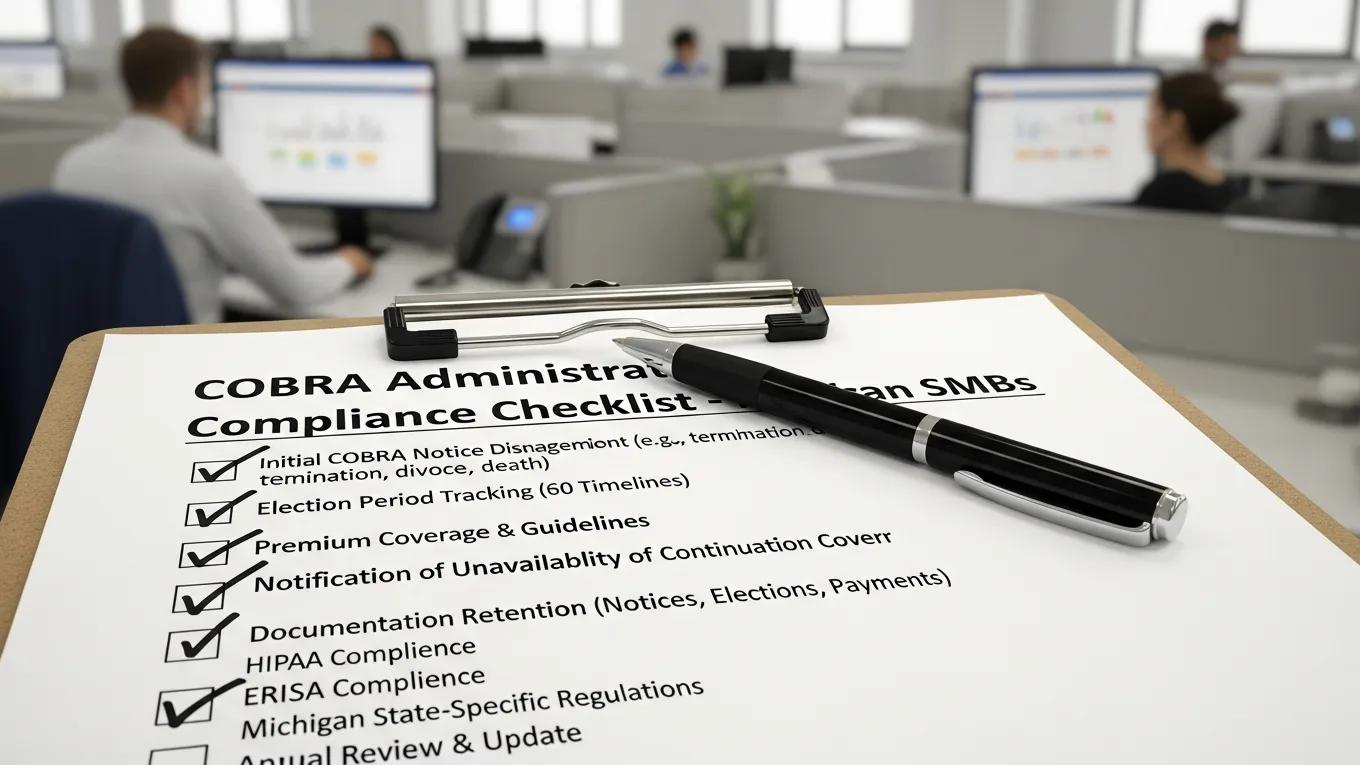
Effective COBRA compliance requires understanding federal requirements, state-specific laws, notification rules, and documentation standards. The federal COBRA law applies to employers with 20 or more employees, while Michigan’s Mini-COBRA law covers those with 2 to 19 employees, imposing additional state obligations.
To ensure compliance, businesses should focus on the following key areas:
- Understanding Applicable Laws: Familiarize yourself with federal COBRA regulations for employers with 20+ employees and Michigan Mini-COBRA for smaller employers.
- Timely Notices: Provide all required COBRA election notices within federally mandated timelines – including the 14-day initial notice after a qualifying event and 44-day election period.
- Maintain Documentation: Keep accurate records of all communications, elections, and payments to demonstrate compliance.
Federal COBRA vs. Michigan Mini-COBRA Laws
Federal COBRA applies to employers with 20 or more employees during at least 50% of the previous calendar year. These employers must offer continuation coverage to qualified beneficiaries after qualifying events.
Michigan Mini-COBRA applies to employers with 2 to 19 employees. This law requires offering continuation coverage, often for a shorter duration and with different benefit requirements. Understanding both laws is critical for Michigan SMB compliance since the size threshold affects obligations.
Qualifying Events for COBRA Coverage
COBRA continuation coverage is triggered by specific qualifying events causing loss of health coverage. These include:
- Voluntary or involuntary job loss (except for gross misconduct)
- Reduction in work hours
- Employee death
- Divorce or legal separation
- Dependent child ceasing to be a dependent under plan terms
- Medicare entitlement (affecting spouse’s coverage)
Notice and Election Timelines: Structured Compliance
Employers must adhere strictly to timeline requirements for notices and elections to maintain compliance:
Premium Calculation and Collection
Under federal COBRA, employers may charge up to 102% of the cost of coverage to COBRA participants, including a 2% administrative fee. This premium covers both the employee and employer portions of the health plan cost.
Employers must establish clear payment schedules, enforce grace periods (up to 45 days), and document all premium collections. Effective tracking minimizes lapses or errors.
Severe Penalty Structures
Non-compliance with COBRA can lead to substantial penalties, including:
- IRS Excise Taxes: Employers may face excise taxes of $100 per day per qualified beneficiary for each failure to provide required notices.
- ERISA Fines: Failures to comply with COBRA, governed under ERISA, can trigger fines and potential legal liability.
- Department of Labor Enforcement: The DOL can impose penalties for COBRA violations and mandate corrective actions.
Penalties accumulate rapidly, especially if multiple beneficiaries are impacted, making stringent compliance essential.
Third-Party Administration (TPA) Solutions
Many Michigan SMBs choose to outsource COBRA administration to specialized TPAs. Benefits of TPA involvement include:
- Expert management of notice deadlines and compliance monitoring
- Automated premium tracking and billing systems
- Up-to-date knowledge of federal and Michigan Mini-COBRA laws
- Reduced administrative burden and liability risk
Partnering with a trusted TPA can significantly reduce the risk of penalties and streamline COBRA management.
Compliance Checklist for Michigan SMBs
- Verify employee count to determine federal COBRA applicability (20+ employees) or Michigan Mini-COBRA (2-19 employees).
- Maintain documentation of qualifying events and notify plan administrator within 30 days.
- Provide COBRA election notices within 14 days of qualifying event notification.
- Allow 60-day election period for beneficiaries to elect continuation coverage.
- Collect premiums at up to 102% of cost; apply up to 45-day grace period for payment.
- Conduct annual audits of COBRA administration and documentation.
- Educate employees on COBRA rights and processes regularly.
- Consider third-party administration solutions to improve compliance accuracy.
- Stay updated on any changes to federal or Michigan Mini-COBRA legislation.
Best Practices
Implementing best practices in COBRA administration helps Michigan SMBs avoid common pitfalls and ensure thorough compliance. Recommended practices include:
- Conduct Annual Compliance Audits: Regularly evaluate COBRA practices against federal and state regulations to identify and correct gaps.
- Educate Employees: Provide clear, accessible COBRA information so employees understand their rights and responsibilities.
- Engage Experts and TPAs: Leverage expert consulting and third-party administration services for complex regulatory adherence.
Common Pitfalls
Employers often make mistakes that lead to penalties and increased risk. Be mindful of:
- Missing COBRA Notice Deadlines: Delays invalidate coverage opportunities and trigger fines.
- Inaccurate Reporting or Documentation: Errors increase liability and complicate audits.
- Neglecting State-Specific Michigan Mini-COBRA Requirements: Failing to comply with local laws can incur additional penalties.
Additional Resources and Support
For further guidance, Michigan SMBs can consult trusted advisors and resources such as the benefits broker or the trusted advisor network. Integrating group health insurance planning and disability life insurance solutions can also safeguard businesses beyond COBRA compliance.
Summary
Michigan businesses must carefully navigate the federal COBRA and Michigan Mini-COBRA laws, including employer size thresholds, qualifying events, precise notice timelines, premium calculations, and heavy penalties for non-compliance. Structured timelines, compliance checklists, and utilization of third-party administration solutions are key to managing these obligations efficiently and avoiding costly penalties.
Selected References
- Department of Labor – COBRA Continuation Coverage
- Michigan Department of Licensing and Regulatory Affairs – Mini-COBRA
- IRS Excise Tax on COBRA Violations
What Are the Key COBRA Compliance Requirements for Michigan SMB Employers?
Michigan SMB employers must adhere to specific compliance requirements under COBRA. These include understanding eligibility criteria, notice requirements, and coverage duration.
- Eligibility Criteria: Employers must determine which employees are eligible for COBRA continuation coverage based on their employment status and qualifying events.
- Notice Requirements: Employers are required to provide initial and ongoing notices to eligible employees regarding their COBRA rights.
- Coverage Duration: COBRA coverage typically lasts for 18 months, but can be extended under certain circumstances.
Which Employees Are Eligible for COBRA Continuation Coverage in Michigan?
Eligibility for COBRA continuation coverage in Michigan is determined by several factors:
- Employer Size Requirements: Employers with 20 or more employees are generally required to offer COBRA coverage.
- Qualifying Events: Employees may qualify for COBRA coverage due to events such as job loss, reduction in hours, or other qualifying events.
- Types of Employees Who May Qualify: Full-time and part-time employees may be eligible, depending on their employment status at the time of the qualifying event.
What Are the Notification Rules Employers Must Follow?
Employers must adhere to specific notification rules to ensure compliance with COBRA regulations:
- Initial Notification Timelines: Employers must provide initial notifications to eligible employees within 14 days of a qualifying event.
- Election Period: Employees must be given a minimum of 60 days to elect COBRA coverage after receiving their notice.
- Premium Payment Grace Period: Employers must allow a grace period for premium payments, typically 30 days.
How Can Michigan SMBs Avoid Penalties Through Effective COBRA Administration?
Effective COBRA administration is key to avoiding penalties. Here are strategies that Michigan SMBs can implement:
- Conduct Annual Compliance Audits: Regular audits can help identify compliance gaps and ensure adherence to regulations.
- Educate Employees Regularly: Ongoing education about COBRA rights and responsibilities can empower employees and reduce misunderstandings.
- Staying informed about changes in COBRA regulations can help employers adjust their practices accordingly. For additional support, consider reaching out to a trusted advisor.
What Are the Common COBRA Penalties and Their Financial Impacts?

Non-compliance with COBRA regulations can result in significant penalties for employers. Common penalties include:
- Failure to Provide COBRA Notices: Employers may face fines of up to $110 per day for each day a notice is not provided.
- Non-Compliance with Mini-COBRA Laws: Michigan has its own mini-COBRA laws that may impose additional penalties for non-compliance.
- Employer Shared Responsibility Payment: Employers may incur shared responsibility payments if they fail to provide required health coverage.
Which Risk Mitigation Strategies Help Prevent Noncompliance?
To prevent noncompliance, Michigan SMBs should consider the following risk mitigation strategies:
- Conduct Annual Compliance Audits: Regular audits can help identify compliance gaps and ensure adherence to regulations.
- Educate Employees Regularly: Ongoing education about COBRA rights and responsibilities can empower employees and reduce misunderstandings.
- Engage Expert Consulting Services: Consulting with COBRA administration experts can provide valuable insights and help navigate complex regulations. To further protect your business, explore options like disability and life insurance to safeguard against unforeseen circumstances.
What Are the Costs and Duration of COBRA Continuation Coverage for Michigan SMBs?
The costs and duration of COBRA continuation coverage are important considerations for Michigan SMBs:
- Standard Duration of Coverage: COBRA coverage typically lasts for 18 months, but can be extended under certain circumstances.
- Premium Payment Responsibilities: Employers may charge up to 102% of the premium cost for COBRA coverage.
- Early Termination Triggers: Certain events, such as the employer ceasing operations, can trigger early termination of COBRA coverage.
How Are COBRA Premiums Calculated and Collected?
Understanding how COBRA premiums are calculated and collected is essential for compliance:
- Premium Payment Responsibilities: Employers must ensure that premiums are collected in a timely manner to maintain coverage.
- Administrative Fees: Employers may charge an administrative fee of up to 2% on top of the premium cost.
- Payment Deadlines: Employers must establish clear payment deadlines to avoid lapses in coverage.
How Long Must Employers Offer COBRA Coverage?
Employers are required to offer COBRA coverage for a specific duration:
- Standard Coverage Duration: COBRA coverage is generally offered for 18 months following a qualifying event.
- Extension for Disability: Coverage may be extended for up to 29 months if the qualified beneficiary is determined to be disabled.
- Termination Triggers: Certain events, such as the employee’s death or divorce, can trigger the termination of COBRA coverage.
What Are the Reporting and Documentation Obligations for COBRA Administration in Michigan?
Employers have specific reporting and documentation obligations under COBRA:
- Eligibility Criteria: Employers must document eligibility criteria for COBRA coverage to ensure compliance.
- Notice Requirements: Accurate records of all notices sent to employees must be maintained.
- Documentation of Notifications: Employers should keep detailed records of all communications related to COBRA administration.
How Should Employers Document COBRA Notifications and Compliance?
Proper documentation of COBRA notifications and compliance is essential for Michigan SMBs:
- Timely Notifications: Employers must document the dates and content of all notifications sent to employees.
- Documentation of Communications: Keeping records of all communications related to COBRA can help demonstrate compliance.
- Tracking Systems: Implementing tracking systems can streamline documentation and ensure timely compliance.
What Are the Best Practices for Maintaining COBRA Records and Audits?
Maintaining accurate COBRA records and conducting regular audits are critical for compliance:
- Conduct Annual Compliance Audits: Regular audits can help identify compliance gaps and ensure adherence to regulations.
- Implement Tracking Systems: Utilizing software to track COBRA notices and deadlines can help ensure timely compliance.
- Maintain Accurate Records: Keeping detailed records of all communications and notices is vital for demonstrating compliance. For comprehensive group health insurance, consult with a trusted provider.

1 thought on “COBRA Administration for Michigan SMBs: How to Ensure Compliance and Avoid Costly Penalties”
Comments are closed.