
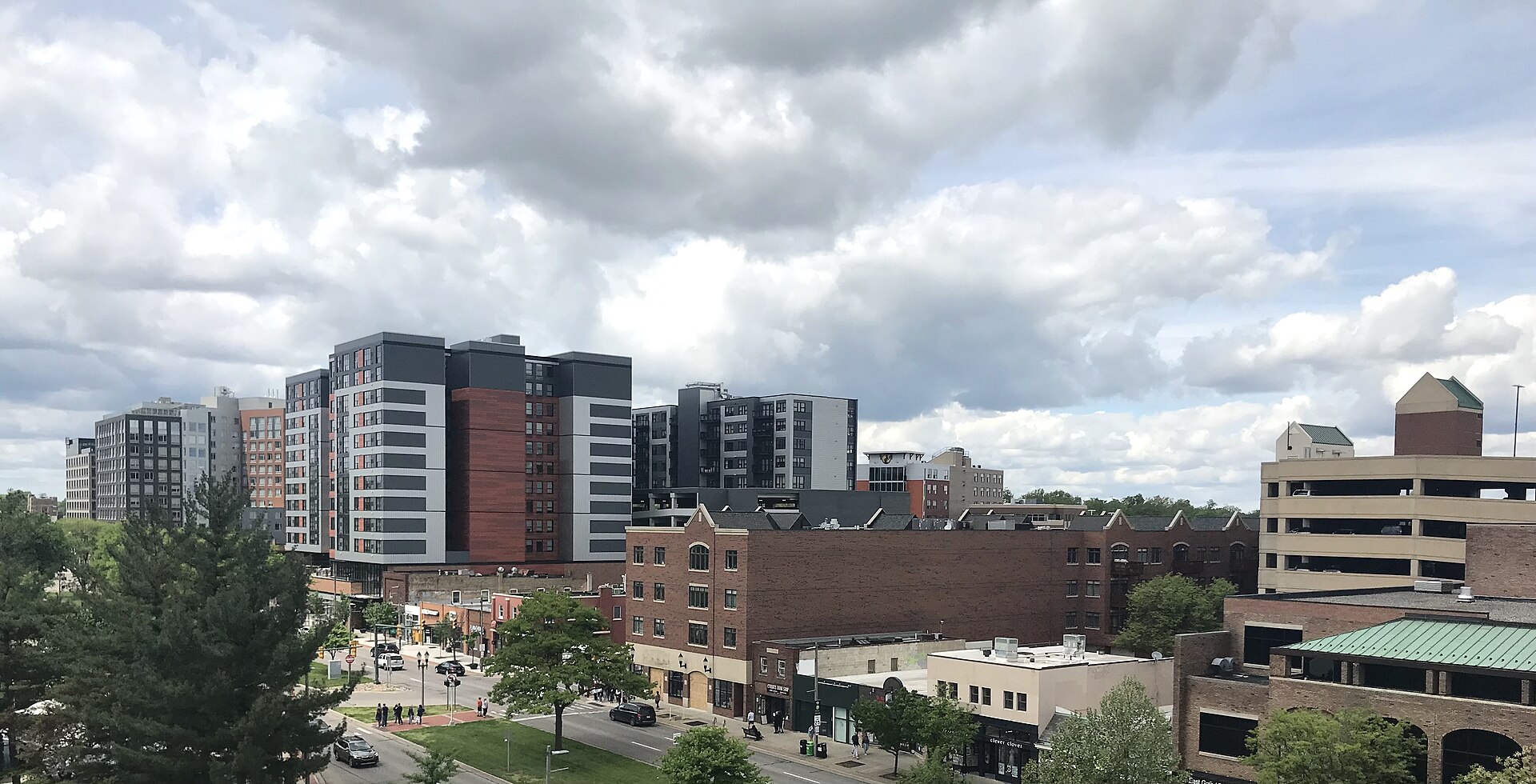
The Academic Calendar Is a Staffing Calendar
Restaurants, retailers and service businesses along Grand River staff for term and contract for summer. Student employees, part-time schedules and genuine seasonality are the norm rather than the exception, and the employer mandate treats seasonal and variable-hour employees differently.
Deciding which category applies, and writing it down along with a look-back measurement period, is what turns a recurring judgment call into a process. For a business whose headcount halves in May, it is the single most valuable document to hold.
When the University Tightens, Everyone Feels It
Michigan State cut 182 positions across 2025, around 1.3 percent of its workforce, targeting roughly fifty million dollars in annual savings after federal research projects worth more than a hundred million were terminated. An institution of that size does not contract quietly.
Employers looking beyond the next quote can start with our health and cost strategy for fully insured plans.
For employers who sell to the university, hire from it, or serve its staff and students, the practical response is structural. Eligibility rules that hold under a hiring pause, continuation procedures ready in advance, and plan documents that exist before anyone asks for them.
Plan Structures for East Lansing Employers
Fully Insured for Small Grand River Businesses
Where enrollment swings with a term calendar and claims history is thin, a fixed rate and no claims exposure is frequently the right answer.
Level-Funded Plans for Steady Payrolls
A healthy group with a stable year-round core gets its own experience at a fixed monthly cost. Check how the contract treats a seasonal headcount swing.
An HSA Plan for Younger Employees
A lower premium with a visible, portable employer contribution. Suits a younger workforce that uses little routine care.
A Standard Plan and a Budget Plan
A richer plan alongside a genuinely low-deduction plan. In a student and service workforce this lifts participation more than a contribution increase.
Rules for Employers on the Term Calendar
Seasonal or Variable-Hour Staff
Different categories with different consequences under the employer mandate. Decide which applies to term-time staff and write it down.
A Documented Look-Back Period
Writing down the look-back measurement, administrative and stability periods decides full-time status before a dispute over it starts.
Do Student Workers Count Toward Fifty?
Full-time equivalents across commonly owned entities decide the mandate, and a term-time peak can affect the calculation.
Section 125 in Writing
Pre-tax premium deductions require a written cafeteria plan document, which many small businesses do not have.
East Lansing Group Insurance Questions
Do student employees count toward fifty?
Generally yes, on a full-time-equivalent basis, with a specific exception for students in federal work-study positions. That surprises employers, and it is worth calculating rather than assuming.
Our headcount halves every summer. What do we do?
Use the seasonal employee rules and a written measurement period. Handled properly it is administrative; handled informally it becomes an eligibility dispute in September.
One University and a Capital Region Next Door
East Lansing had 47,741 residents at the 2020 census. Michigan State University employs around 11,118 people and enrolled roughly fifty-two thousand students in autumn 2025, making it the economy of the city by a wide margin. MSU Federal Credit Union is headquartered here with around 1,261 employees and $7.6 billion in assets. East Lansing Public Schools and city government follow. The wider Lansing region adds the State of Michigan at close to fourteen thousand, University of Michigan Health-Sparrow at around nine thousand, Auto-Owners Insurance at nearly six thousand and General Motors at around four thousand. McLaren Greater Lansing, a 240-bed hospital that opened in 2022 on the southern edge of the MSU campus, is the nearest facility; University of Michigan Health-Sparrow Lansing, with 733 licensed beds and a Level I trauma center, is the regional referral hospital.
Sparrow Changed Names in 2024
Sparrow Health System became University of Michigan Health-Sparrow in April 2024. Provider lists and employee materials using the old name are out of date.
A New Hospital on Campus Edge
McLaren Greater Lansing opened in 2022 with 240 beds, replacing two legacy hospitals. It is the closest inpatient facility to most East Lansing employers.
University Cuts Reach Local Business
182 positions went in 2025. Suppliers, landlords and service businesses feel a contraction of that size even though it happened on campus.
Capital Region Communities Near East Lansing
- Employee benefits in Lansing
- Employee benefits in Charlotte
- Employee benefits in Howell
- Employee benefits in Owosso
- Employee benefits in Haslett
- Employee benefits in Bath
- Employee benefits in Dewitt
- Employee benefits in Holt
All greater Lansing cities we serve · Every Michigan city we serve
Benefits Questions From East Lansing Employers
Does CFH serve companies in East Lansing?
Yes. East Lansing restaurants, retailers, service businesses and university suppliers use us for plan design, funding and carrier comparisons, renewal negotiation, compliance and enrollment. We are licensed insurance brokers, and for proper coverage of an account we work in teams of five. We begin with your current plan and renewal.
Do student employees count toward the fifty-employee threshold?
Generally yes. Student workers count on a full-time-equivalent basis like any other employee, with a narrow exception for hours worked in federal work-study positions. For a business near a large campus that can be the difference between being an applicable large employer and not, so it is worth calculating properly rather than assuming students are excluded.
Could CFH review our plan while our broker keeps it?
Yes, at no cost and without obligation. We will explain an East Lansing employer’s increase and whether the plan’s eligibility rules fit a headcount that halves in summer. If the price is right, we will say so.
Headcount halves every May and your plan rules never adjust? See how switching to CFH works.
How CFH Works With East Lansing Employers
Most East Lansing groups hear from their broker once a year, at renewal. We work your account all year, as an extension of your HR team. For proper coverage of an account we work in teams of 5: an account executive, an account manager, a plan analyst, customer service and IT.
Funding Compared on Your Own Numbers
We compare fully insured, level-funded and self-funded options side by side using your census and claims, not a generic illustration. Start with our guide to level-funded health plans.
Compliance Handled Through the Year
ACA reporting, ERISA, COBRA, Form 5500 and the Michigan rules that touch your plan are part of the work, not an extra. CPAs and attorneys are available through CFH once you are a client. See Michigan benefits compliance.
Small Employers Are Not an Afterthought
We work with employers from two employees up, not only mid-sized groups, and our funding advice changes with your size.
A Second Opinion Before You Switch
If you already have a broker, send us the renewal. We review it at no cost and with no obligation, and tell you what we would change and what we would keep. Read how a renewal second opinion works, or see what switching to CFH involves.
When Your Broker Changes Hands
Brokerages are bought, merged and reorganized, and your account team can change with them. If your service has slipped since that happened, a review of your current plan and renewal is a low-risk way to see what a dedicated team would do differently. If your broker was acquired, see what to check after a broker acquisition.
What an East Lansing Review Needs
Send the East Lansing renewal letter, plan summary, contribution and enrollment by tier, and two more documents at fifty or above, along with summer and term headcounts. We will show what drives the number and how seasonal staff should be classified. 248.370.8853 or info@cfhic.com.
Start the Review Email info@cfhic.com Call 248.370.8853
An independent employee benefits consulting firm. We look at the entire benefits program — cost, plan performance, risk and administration.
Bloomfield Hills, MI 48304
248.370.8853
Colorado Springs, CO 80921
719.425.2649
Houston, TX 77084
281.404.5670
Related Guides
Service Areas
Employee benefits guidance for employers in every region of Michigan we serve.
Small Group Health Insurance Guide for Michigan Employers (2 to 50 Employees)
How small group health insurance works in Michigan and how to compare your options.
Employer Benefits Guides: Eligibility, Plan Design, Life Events and Rules
Our library of plain-English guides on eligibility, plan design and compliance.
