
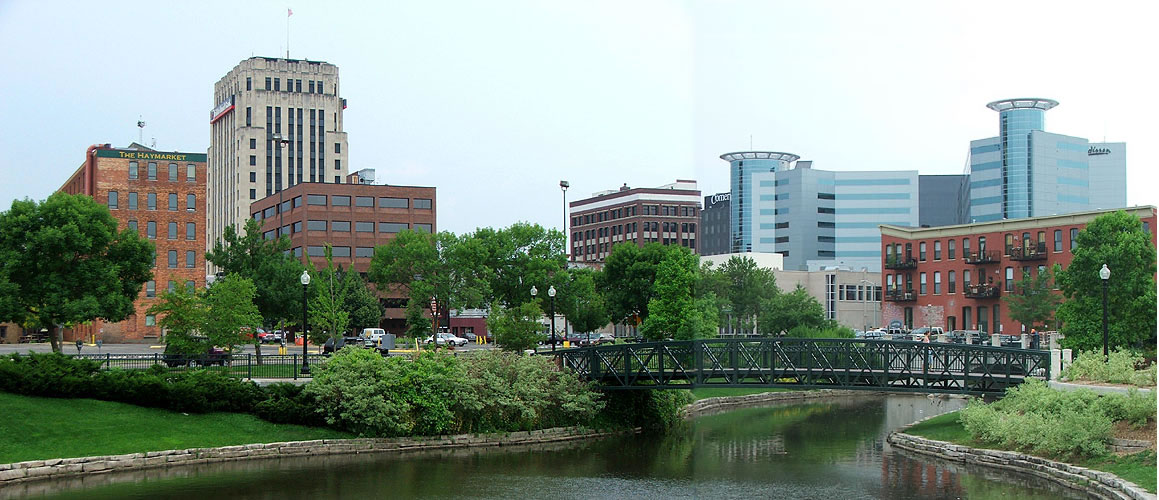
Recruiting Against Pharma and Two Hospitals
A Kalamazoo employer of twenty or eighty people is hiring from the same pool as large pharmaceutical and hospital employers with mature benefits programs. Matching them on premium subsidy is not realistic. Matching them on the things a candidate can actually evaluate — the deductible, the out-of-pocket maximum, whether their doctor is in network, whether there is any employer money in an account — frequently is.
We would rather restructure a package than raise a budget. Moving a few thousand dollars from premium subsidy into an HSA contribution and a dental schedule that covers major services usually recruits better than the same money spent invisibly.
Two Hospital Systems, One Real Choice
Bronson Methodist and Beacon Kalamazoo — the hospital that was Ascension Borgess until Beacon Health System completed its acquisition on 1 July 2025 — are the two acute-care options in the city. Which one your employees use is not evenly split, and it is knowable before you choose a network.
If rising premiums are the concern, our health and cost strategy shows where cost can move between renewals.
Where a market has two systems, tiered network designs become genuinely useful: steering toward one system can save meaningful money without cutting anyone off from care. It only works if you check the claims first. Guessing which hospital your people use is how a network change becomes an employee-relations problem.
Funding Structures for Kalamazoo Groups
Fully Insured for Smaller Employers
Community rating protects a small group with poor experience. Under about twenty-five lives it is frequently still the right answer, and we will tell you when it is.
Level-Funding With Good Claims
A healthy group gets its own experience with a fixed monthly cost and a possible surplus return. Underwriting is required, and the run-in provision is where these contracts differ most.
Self-Funding Above a Hundred Lives
Realistic from roughly a hundred lives with stable claims. Attachment points and the treatment of a known large claimant matter more than the administration fee.
Tiering Between Two Hospital Systems
With two competing systems in the city, a design that tiers Bronson and Beacon differently can move real money. Map your claims to facilities before you price it.
Rules for Kalamazoo Plan Sponsors
Affiliates and the Fifty Count
Full-time equivalents across commonly owned entities decide the employer mandate, not the headcount on one payroll.
Affordability at Entry-Level Wages
The lowest-cost self-only option has to stay under the annual percentage of the lowest-paid full-time employee’s wage.
Cafeteria Plan Paperwork
Pre-tax premium deductions require a written cafeteria plan document. Many employers deduct pre-tax without one.
The 5500 at One Hundred Participants
Reaching a hundred participants brings the Form 5500 with Schedule A, which needs the wrap document and summary plan description in place first.
Answers for Kalamazoo Plan Sponsors
Our renewal came in at double digits. Is that the market?
Sometimes, and sometimes it is one claimant or a demographic shift you cannot negotiate away. We separate trend from experience before recommending anything, because the two call for completely different responses.
Can we tier the hospitals without upsetting people?
If the claims support it, yes. The failure mode is tiering the system your employees actually use into the expensive tier. That is a data question, and the data is available before you commit.
Life Sciences, Health Care and a Research University
Kalamazoo had 73,598 residents at the 2020 census. Bronson Healthcare Group, whose 434-bed Bronson Methodist Hospital and Level I trauma center sit downtown, describes itself as one of the city’s largest employers with more than eight thousand people. Beacon Kalamazoo, the 422-bed hospital formerly known as Ascension Borgess, joined Beacon Health System on 1 July 2025. Western Michigan University enrolls more than seventeen thousand students, and Kalamazoo Public Schools runs a district of more than twelve thousand. The wider life sciences cluster sits mostly in adjacent Portage: Pfizer’s manufacturing campus, Stryker’s corporate headquarters and Zoetis animal health research all operate there. Pfizer announced a $750 million expansion at its Portage facility with three hundred new jobs.
Portage Is Where the Headquarters Are
Stryker is headquartered in Portage, not Kalamazoo, and Pfizer’s plant is there too. For benefits purposes the labor market is one market — but get the geography right in your own recruiting copy.
The Borgess Name Is Gone
That hospital has been Beacon Kalamazoo since July 2025. Network documents, provider directories and employee communications written before then are out of date, and employees notice.
Contractor Transitions Move Census
A large food and support-services contract at Beacon facilities is being brought in-house, moving several hundred contractor roles. If you are a staffing or services employer here, that is a census event, not just news.
Southwest Michigan Communities Near Kalamazoo
- Employee benefits in Sturgis
- Employee benefits in Coldwater
- Employee benefits in Niles
- Employee benefits in Benton Harbor
All southwest Michigan cities we serve · Every Michigan city we serve
Plain Answers for Kalamazoo Businesses
Can CFH help employers based in Kalamazoo?
Yes. Kalamazoo life-sciences suppliers, health care employers, manufacturers and service firms use us for plan design, funding and carrier comparisons, renewal negotiation, compliance and enrollment. We are licensed insurance brokers, and for proper coverage of an account we work in teams of five. We start by reviewing your current plan and renewal.
Which Kalamazoo hospitals should our plan include?
Two acute-care hospitals sit in the city: Bronson Methodist Hospital, with 434 beds and a Level I trauma center, and Beacon Kalamazoo, with 422 beds, which was Ascension Borgess until Beacon Health System completed its acquisition on 1 July 2025. Which network tier each falls into varies by carrier and plan.
Does CFH offer second opinions on Kalamazoo renewals?
Yes, free and with nothing to sign. We will show what drove the increase and whether moving money from premium into an HSA and dental would recruit better. If the price is right, we will say so.
Spending the whole budget on premium nobody notices? Find out how switching to CFH works.
Share Your Kalamazoo Renewal Packet
Send the Kalamazoo renewal letter, plan summary, contribution and enrollment by tier, and two more documents at fifty or above. A claims report by hospital lets us test tiering between Bronson and Beacon. 248.370.8853 or info@cfhic.com.
Start the Review Email info@cfhic.com Call 248.370.8853
An independent employee benefits consulting firm. We look at the entire benefits program — cost, plan performance, risk and administration.
Bloomfield Hills, MI 48304
248.370.8853
Colorado Springs, CO 80921
719.425.2649
Houston, TX 77084
281.404.5670
