
Subscribe on LinkedIn: Straight Talk on Benefits (Sunny Connolly, weekly) | CFH Benefits Brief (CFH Insurance Consultants, weekly)
By CFH Insurance Consultants
December is when small compliance gaps turn into real exposure. Three items belong on every employer’s close-out list: the gag clause attestation due December 31, the affordability percentage you will test against for 2027, and the Form 1095-C reporting that follows in early spring. None is hard once it is on a calendar. Each is easy to miss when it is not. We are benefits consultants, not attorneys, so treat this as a working checklist and confirm specifics with your own counsel.
In this edition: File the gag clause attestation by Dec 31 | Know the affordability percentage before you set 2027 rates | Get Form 1095-C right before the spring deadline
File the gag clause attestation by Dec 31
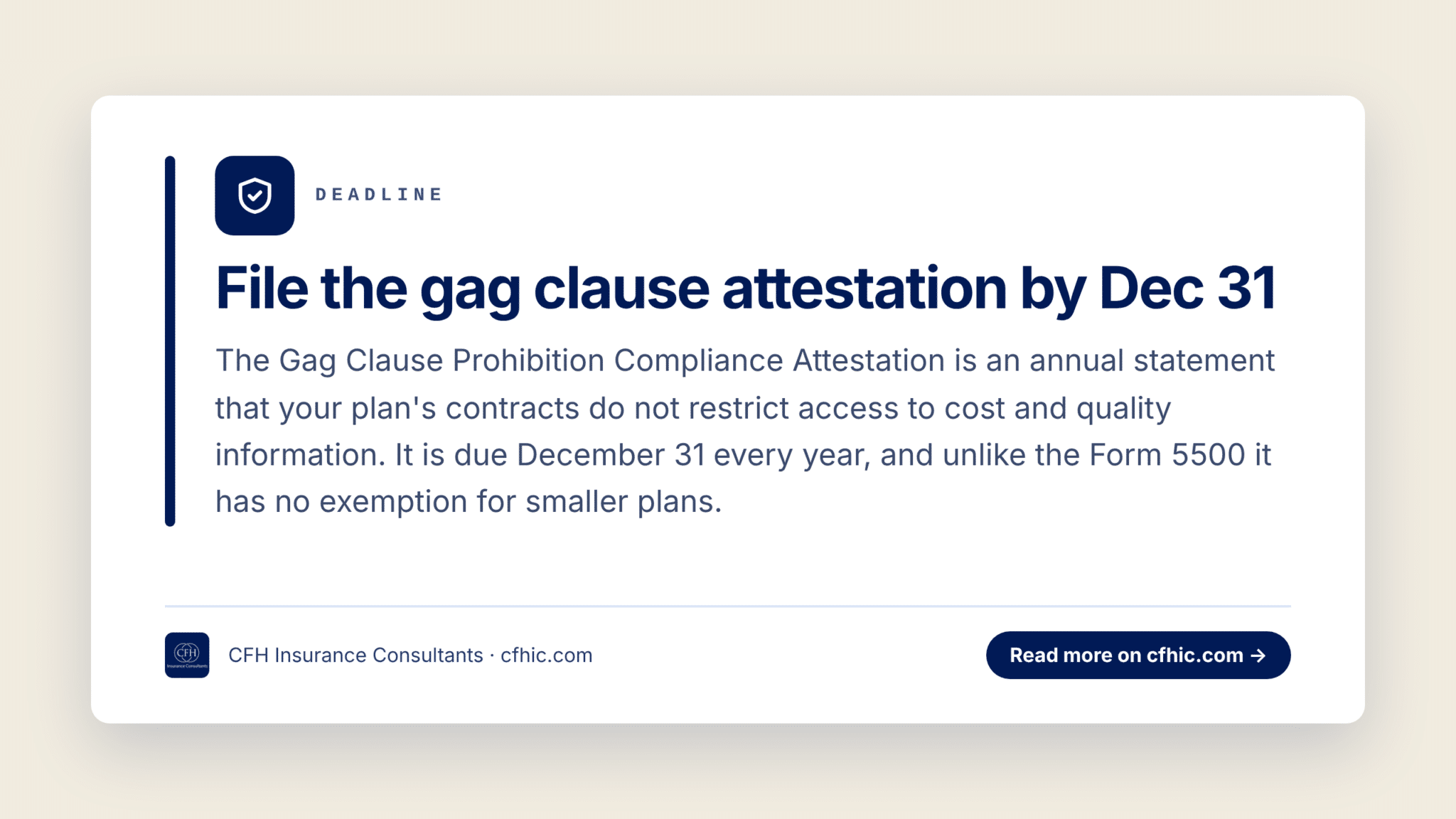
The Gag Clause Prohibition Compliance Attestation is an annual statement that your plan’s contracts do not restrict access to cost and quality information. It is due December 31 every year, and unlike the Form 5500 it has no exemption for smaller plans.
For fully insured plans the carrier usually files, and where it does, the plan is treated as compliant too. That relief depends on the filing actually happening. Ask in writing whether it will be submitted and keep the reply. For self-funded and level-funded plans the obligation stays with the plan even when the administrator submits on its behalf. If your administrative services agreement limits sharing de-identified claims data with an adviser, that is a contract to renegotiate, not only a form to complete.
Know the affordability percentage before you set 2027 rates
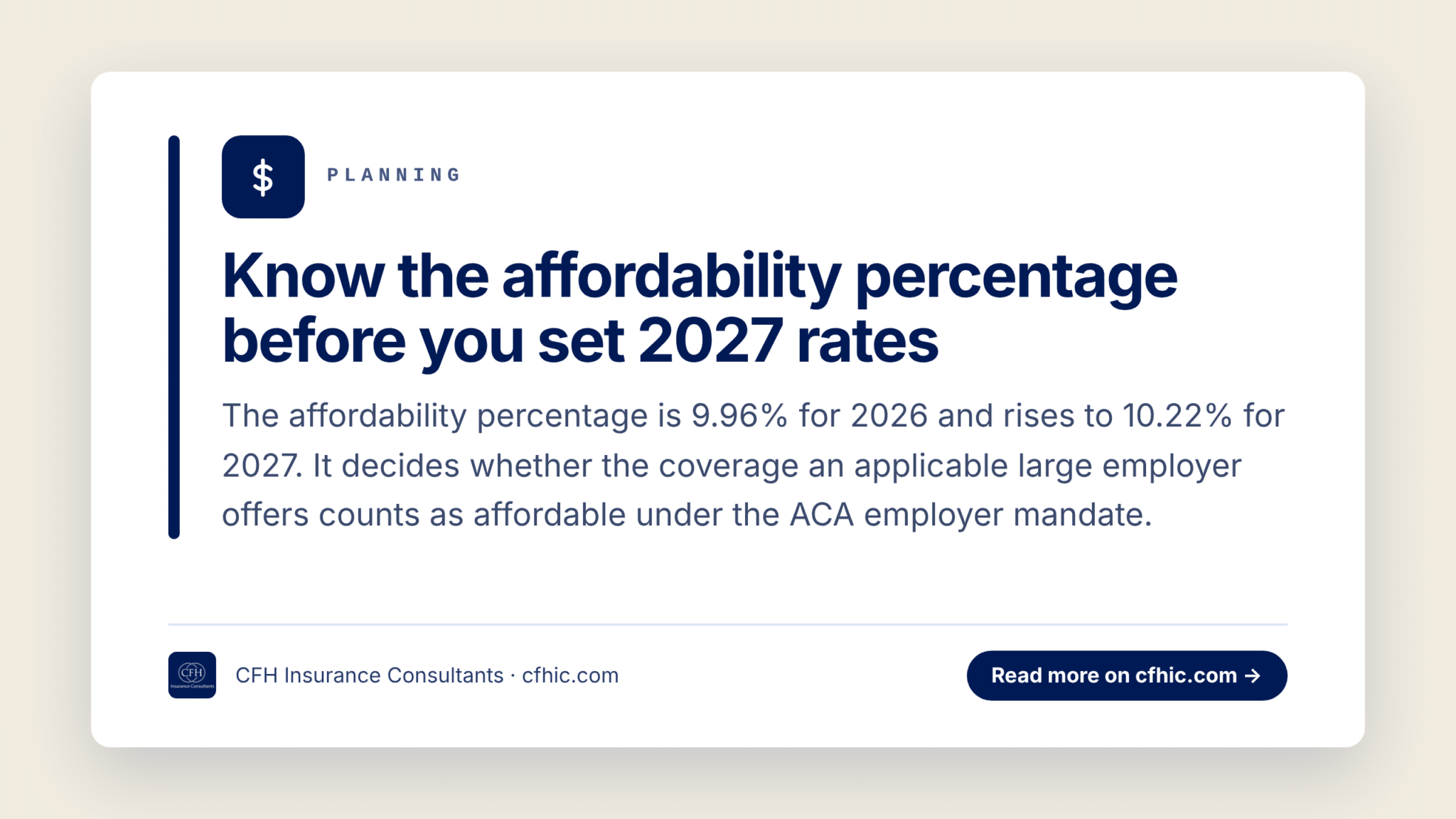
The affordability percentage is 9.96% for 2026 and rises to 10.22% for 2027. It decides whether the coverage an applicable large employer offers counts as affordable under the ACA employer mandate.
The test uses the lowest-cost self-only option that meets minimum value, not the plan an employee chose and not the family rate. Run it against the safe harbor you intend to use, and run it again if contribution rates or plan years change. A higher percentage allows a slightly higher contribution, but the penalty amounts for getting it wrong rose as well. Cash paid to employees who waive coverage can also count toward the employee’s cost, so check how any opt-out payment is structured.
Get Form 1095-C right before the spring deadline
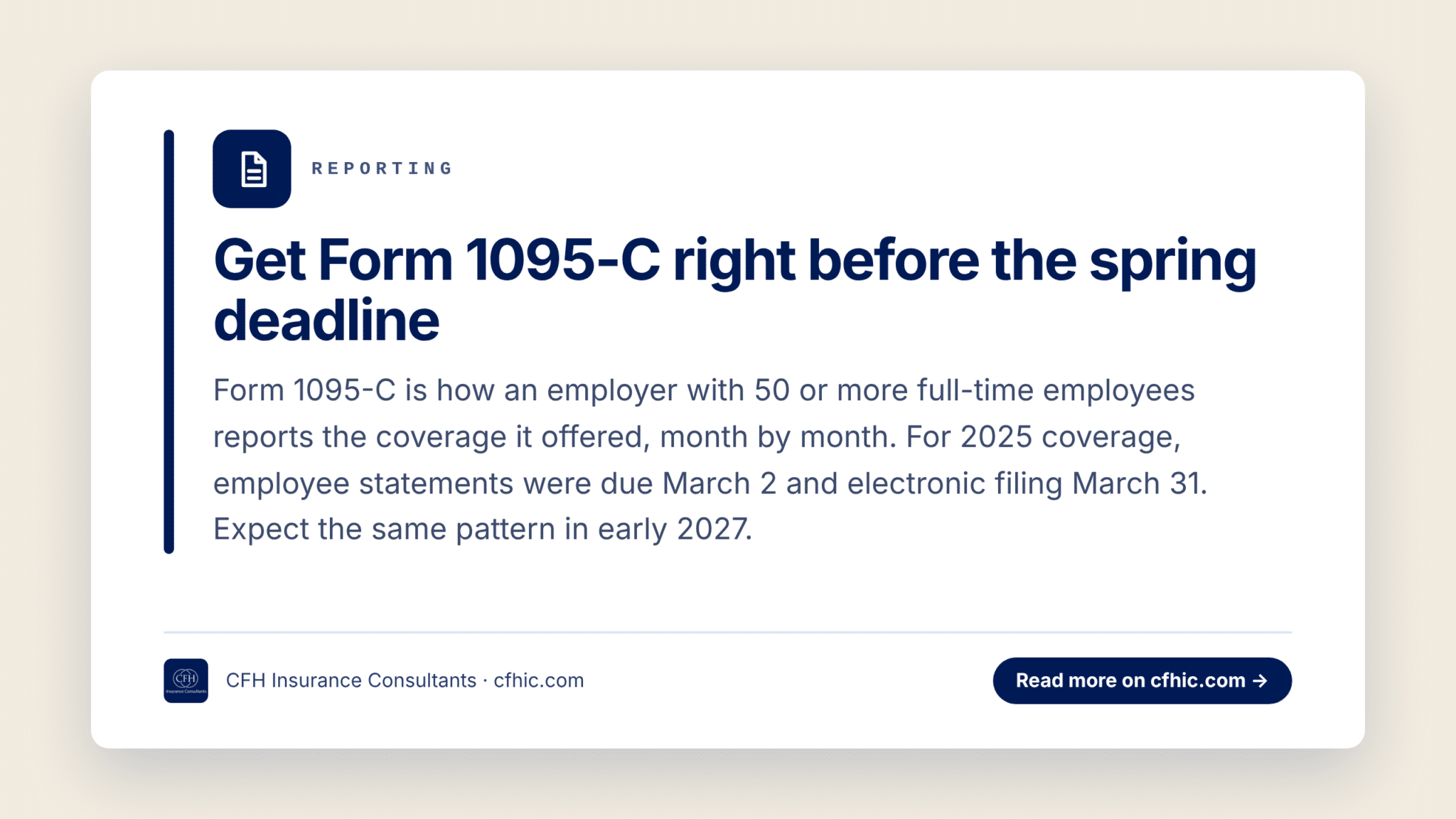
Form 1095-C is how an employer with 50 or more full-time employees reports the coverage it offered, month by month. For 2025 coverage, employee statements were due March 2 and electronic filing March 31. Expect the same pattern in early 2027.
The codes carry the risk. Lines 14 and 16 tell the IRS whether you made a qualifying offer, and a single wrong code is a common reason employers receive penalty letters they do not owe. Review waiting-period coding, the self-only cost on Line 15 and the safe harbor code now, while there is time to fix them. A self-insured plan also reports covered individuals, including retirees and COBRA participants, so confirm that part of the form is complete.
Put all three on one page with an owner and a date beside each. Then ask your carrier and administrator for written confirmation of what they will handle. The paper trail is what protects you if a question comes later.
If you would like these checked against your own plan and contribution rates, send us your renewal and we will review it at no cost.
Questions we get
When is the gag clause attestation due?
December 31 each year. It is submitted through a federal portal rather than filed with a tax return, and there is no extension. See our gag clause attestation guide.
What is the ACA affordability percentage for 2027?
10.22%, up from 9.96% for 2026. It is tested against the employee’s required contribution for the lowest-cost self-only option that meets minimum value. See the 2026 and 2027 affordability percentages.
Go Deeper With Our Complete Employer Guides
- The Complete Benefits Compliance Guide: ACA, ERISA, COBRA, Section 125 and reporting deadlines.
- The Complete Broker and Consulting Guide: How to choose, evaluate and switch an employee benefits broker.
- The Complete Ancillary Benefits Guide: Dental, vision, life, disability and voluntary benefits explained.
