
A Season Is a Benefits Structure, Not a Nuisance
Restaurants, lodging, retail and marine businesses on Little Traverse Bay staff up for summer and contract afterwards, often with the same people returning year after year. Under the employer mandate, seasonal employees and variable-hour employees are handled differently, and which category your staff fall into is a decision to make and document rather than one to assume.
A written look-back measurement period, with defined administrative and stability periods, is what converts this from a monthly judgment call into a process. For a seasonal employer it is the single most valuable document to have in the file.
Recruiting Against a Regional Hospital
McLaren Northern Michigan is the largest employer in the area by a wide margin, with more than two hundred and thirty physicians and a referral catchment covering much of northern Michigan. Its benefits package sets the local expectation.
Employers looking beyond the next quote can start with our health and cost strategy for fully insured plans.
A twenty-person business cannot match that on richness, and does not have to. What it can do is fund the visible parts — an employer contribution to a health savings account, dental that covers major services, a disability benefit — and make sure the medical plan does not have a surprise in it. Clarity competes better than generosity nobody can see.
Plan Structures for a Town With a 202-Bed Hospital
Fully Insured for Small Year-Round Staffs
Where enrollment swings with a season and the claims history is thin, a fixed rate and no claims exposure is frequently the right answer, and we will say so.
Level Funding Once the Group Is Stable
A healthy group with a stable year-round core gets its own experience at a fixed monthly cost. Check how the contract handles seasonal headcount swings before signing.
An HSA Plan That Competes With the Hospital’s Package
A lower premium plus an employer HSA deposit employees can see and keep. Next to a large institutional package, spelling out the employer’s money helps a small business hold its own.
A Network Wide Enough for Specialist Trips
In a rural referral market, out-of-area and out-of-network provisions matter more than the local discount. Compare those first.
Seasonal-Staff Rules to Settle Before May
Seasonal Employee or Variable-Hour Employee?
Two different categories with different consequences under the employer mandate. Decide which applies and write it down.
A Written Look-Back Period
Put the look-back measurement, administrative and stability periods in writing, and full-time status is decided by the document instead of an argument.
Does the Summer Peak Push You Past Fifty?
The employer mandate turns on full-time equivalents across every commonly owned business, and summer hours can tip the count.
A Cafeteria Plan Document for Pre-Tax Premiums
Pre-tax premium deductions require a written cafeteria plan document, which many seasonal employers do not have.
Questions We Hear Around Little Traverse Bay
Do we have to cover summer staff?
It depends on the seasonal employee rules and on your full-time-equivalent count across the year. Both are answerable in advance, and the answer should be in writing before anyone asks you for it.
Our people travel for specialist care. Does the plan follow?
Only as well as its out-of-area provisions allow, and those vary far more between plans than the headline rate does. In northern Michigan that is the comparison that matters most.
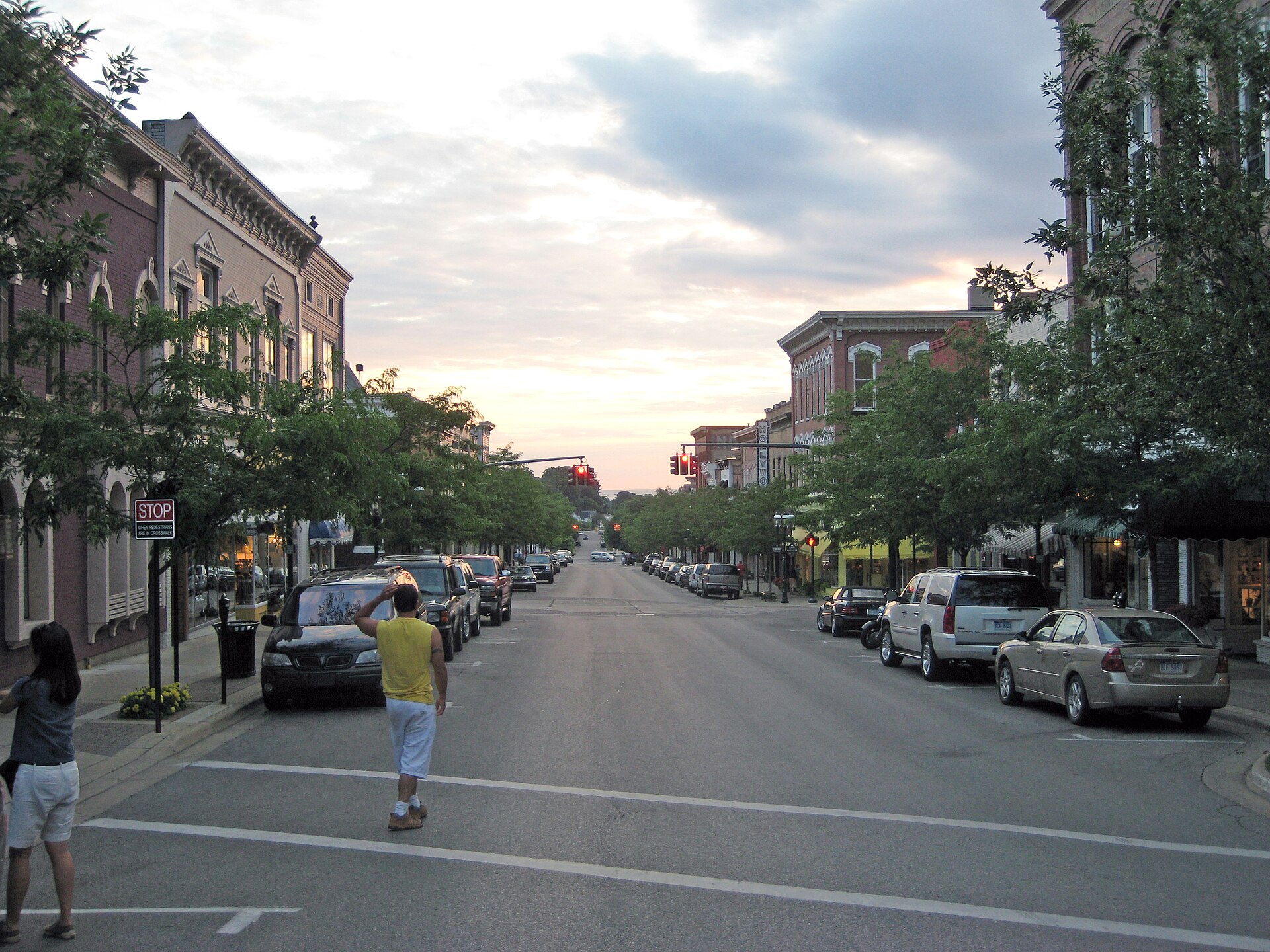
A Resort Town With a Regional Referral Hospital
Petoskey had 5,877 residents at the 2020 census and is the seat of Emmet County. McLaren Northern Michigan, a 202-bed hospital on Connable Avenue with more than two hundred and thirty physicians, serves as a referral center for twenty-two counties and is a certified Primary Stroke Center. Odawa Casino Resort, owned by the Little Traverse Bay Bands of Odawa Indians, operates just outside the city in Resort Township. The Public Schools of Petoskey employ around 352 full-time equivalents across a district of roughly twenty-four hundred students, and North Central Michigan College runs a 280-acre campus in the city. Moeller Aerospace manufactures aircraft components here, and Bay Harbor Company anchors resort and land development on Little Traverse Bay. Emmet County government adds the county-seat layer.
The Hospital Is Bigger Than the Town
A 202-bed referral hospital in a city of under six thousand is unusual. It dominates both local employment and the local benefits benchmark.
Tourism Sets the Calendar
Summer staffing swings are structural here. Eligibility rules written to anticipate them cost far less than eligibility disputes that follow them.
Specialist Care Travels
Care beyond what McLaren Northern Michigan provides means a trip. How a plan treats out-of-area care deserves more weight than it usually gets.
Other Northern Michigan Towns Nearby
- Employee benefits in Cadillac
- Employee benefits in Alpena
- Employee benefits in Sault Ste. Marie
- Employee benefits in Ludington
- Employee benefits in Elk Rapids
- Employee benefits in Traverse City
- Employee benefits in Lewiston
All northwest Michigan cities we serve · Every Michigan city we serve
Petoskey Employers Also Ask
Is Petoskey too far north for CFH to help?
No. We work with Petoskey employers on plan design, carrier and funding comparisons, renewal negotiation, compliance and enrollment. As licensed insurance brokers we staff every account with a team of five for proper coverage, and we usually start by reviewing the plan and renewal you already have.
How should a seasonal business handle coverage?
By deciding, in writing, whether its staff are seasonal employees or variable-hour employees under the employer mandate, and adopting a written look-back measurement period with defined administrative and stability periods. That framework determines who must be offered coverage and for how long, and it is what prevents an eligibility dispute in the off-season.
Can you review our renewal if another broker placed it?
Yes, and it will not cost you anything or commit you to a change. We will explain what is driving the increase and whether the market has something better. If the current program is priced right, you will hear that from us too.
Summer staff, a hospital competitor and a quiet broker? See what moving to CFH involves.
Quick Answers for Petoskey Employers
Does a Petoskey employer have to offer health insurance?
Federal law requires coverage only from applicable large employers, which average 50 or more full-time-equivalent employees. Michigan has no separate state employer mandate, so a Petoskey business under that size decides for itself whether to offer a plan. Crossing 50 changes the rules, and our guide to crossing fifty employees walks through what changes.
What counts as affordable coverage for Petoskey employees?
For an applicable large employer, the lowest-cost self-only plan generally has to cost an employee no more than 9.96 percent of household income in 2026, rising to 10.22 percent in 2027. Employers usually test this with an IRS safe harbor, and our affordability calculator runs your own wage data against them.
Guides for Petoskey Employers
Michigan Health Insurance Broker
How an employee benefits broker works with your Petoskey team, from census and market review through renewal.
Companies With 2 to 50 Employees
Plan design, participation rules and cost levers for the smallest Petoskey groups.
Companies With 51 to 249 Employees
Funding choices and compliance duties as a Petoskey employer grows past 50.
The Renewal Decoder
Read a Petoskey renewal line by line before you accept the increase.
Choosing a Benefits Consulting Firm
What to ask any consultant or broker before you sign, with questions Petoskey HR teams use.
Self-Funded vs Fully Funded
How the two funding models compare, and which size of Petoskey employer should consider each.
All Northwest Michigan cities we serve · Every Michigan city we serve
Send the Renewal Before the Season Turns
Forward the renewal letter, the plan summary, what you contribute at each tier and how many are enrolled in each (two more documents if you have fifty or more employees) and we will show you what is inside the increase. Call 248.370.8853 or email info@cfhic.com.
Start the Review Email info@cfhic.com Call 248.370.8853
An independent employee benefits consulting firm. We look at the entire benefits program — cost, plan performance, risk and administration.
Bloomfield Hills, MI 48304
248.370.8853
Colorado Springs, CO 80921
719.425.2649
Houston, TX 77084
281.404.5670
Related Guides
Service Areas
Employee benefits guidance for employers in every region of Michigan we serve.
Small Group Health Insurance Guide for Michigan Employers (2 to 50 Employees)
How small group health insurance works in Michigan and how to compare your options.
Employer Benefits Guides: Eligibility, Plan Design, Life Events and Rules
Our library of plain-English guides on eligibility, plan design and compliance.
