
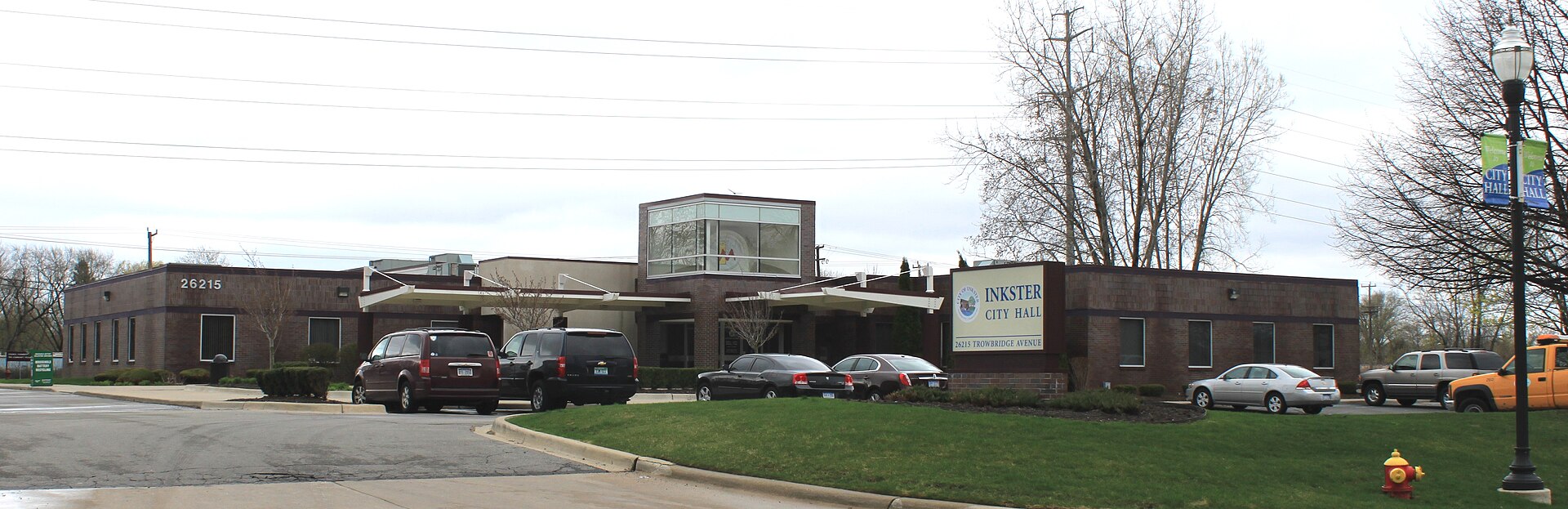
Start With What the Household Has on Hand
Inkster’s median household income is a little over thirty-nine thousand dollars. Median gross rent is around eleven hundred and seventy dollars a month. Put those two figures next to each other and housing alone takes better than a third of a median household’s income before anything else is paid. Fewer than half of households own their home, which is unusual for western Wayne County, and roughly thirty-five percent of residents live below the poverty line. Ten percent of residents under sixty-five carry no coverage at all.
Related: how we help employers improve workforce health and control healthcare costs all year, not just at renewal.
Benefits decisions are usually framed around the premium, because the premium is the number the employer writes a check for. For a workforce with this financial profile the premium is the less important half of the design. What decides whether the plan does anything is the cost-sharing: what an employee has to produce, in cash, at the moment they need care.
A Deductible Is Only Insurance If Someone Can Reach It
The high-deductible plan is the standard answer to a tight benefits budget, and for a great many employers it is the right one. In a workforce where a large share of households could not produce two thousand dollars in a week, it quietly stops being insurance and becomes a discount card.
The mechanism is straightforward. An employee with a three thousand dollar deductible who needs an unexpected scan is told the plan will pay nothing until they have spent three thousand dollars of their own. They do not have it. So they do not have the scan, or they have it and do not pay the bill, and the account goes to collections. The employer sees a plan with a low premium and good claims experience and concludes it is working well. What they are actually looking at is a plan nobody is using.
The health savings account that is supposed to solve this only solves it for people who can fund it. An employee at this income level is not deferring three hundred dollars a month into a savings account, and if the employer is not seeding the account meaningfully then the tax advantage is an advantage on paper. That is not an argument against high-deductible plans. It is an argument for matching the design to the payroll rather than to the budget.
Copay-First Design and What It Actually Costs
The alternative is a plan that puts a fixed, knowable price on the things people use most and accepts a higher premium for it. A flat copay for a primary care visit. A separate, low copay tier for generic prescriptions that sits outside the deductible. Urgent care priced clearly enough that an employee knows before they go.
None of this is exotic and all of it costs more in premium than the leanest plan on the spreadsheet. The trade is worth stating plainly to an employer, because the comparison that gets made is almost always the wrong one. A copay plan does not cost more than a high-deductible plan. It costs more in premium and less in the moment, and which of those the employer would rather carry depends entirely on who is enrolled.
There is a middle route that often works better than either extreme: keep the deductible where the budget requires it, but carve specific services out from under it. Primary care, generic drugs and behavioral health visits sitting outside the deductible cost the plan comparatively little and change the employee’s experience of it completely, because those are the encounters that either happen early and cheaply or happen late and expensively.
Deferred Care Is the Most Expensive Kind
Every dollar a plan saves by making the front end expensive is borrowed from the back end, and the interest rate is poor.
The pattern is consistent enough to plan around. A condition that a primary care visit and a generic prescription would have managed goes unaddressed because the visit costs money the household does not have that month. It surfaces eighteen months later in an emergency department, which is the most expensive door in American medicine and the one with the least ability to manage anything ongoing. The plan then pays for the admission it was never going to avoid and the employer sees a claims spike that appears to come from nowhere.
For an employer, the practical version of this is the emergency department benefit itself. A plan with a high emergency copay is trying to discourage inappropriate use, which is reasonable, but it only works if there is a cheaper door that is genuinely open. If urgent care is also behind the deductible and the primary care appointment is three weeks out, the expensive door is the only one there is, and the plan has designed the behavior it is being penalized for.
One Number Here Is Better Than You Would Expect
Something in Inkster’s census profile cuts against the rest of it. More than ninety-five percent of households have a computer and nearly ninety-three percent have a broadband subscription. Those figures are close to the state average and well ahead of what the income figures would predict.
That matters because it makes virtual care genuinely viable here, and virtual care is one of the few things in a benefits package that is cheap to add and lands hardest on exactly the households that struggle most with access. A telehealth benefit at no cost to the employee removes the transport problem, the time-off-work problem and the up-front cash problem in one move, for conditions that make up a large share of primary care volume.
It is worth being precise about what it does not do. Virtual care does not replace a relationship with a primary care physician, it does not handle anything that needs hands or imaging, and a telehealth line bolted onto a plan whose in-person care is unaffordable is a patch rather than a fix. Used properly it is the front door that makes the rest of the design work. Used as a substitute for affordable care it is a way of looking responsive while changing nothing.
Small Employers, and Why That Is Not a Disadvantage
Inkster’s employer base is genuinely small. Contractors, care providers, professional offices, family firms with a handful of people on the payroll. There is no dominant private employer in the city, and we would rather say so than assemble a list that flatters the page.
Being small in the group market is a real constraint in one direction and an advantage in another. Below a certain enrolled headcount an employer’s own claims barely move their rate, which removes most of the negotiating leverage a larger group has. What it also removes is the pressure to accept a design because it suits an average. A small employer knows who is on the plan. The design can be built for those specific people rather than for a demographic profile, and that is a better position than most mid-sized employers are in.
The other consequence of scale is that the compliance load lands differently. A business below fifty full-time equivalent employees is not subject to the employer mandate and does not file the associated returns, which removes a real administrative burden. The obligations that do apply, the plan documents, the participant disclosures and the annual notices, apply regardless of size and are the ones small employers most often let slide. Nearby care is not the issue in western Wayne County, with the Corewell and Henry Ford facilities in Dearborn and Trinity Health in Livonia all within a short drive. Whether the plan opens those doors at a price the household can pay is the whole question.
The Small Firms That Employ Inkster
Inkster is a commuting city. Wayne County’s own economic development material describes it as primarily a bedroom community, and we could not verify a single large private employer inside the city limits — so we are not going to list one. The substantial local employers are the City of Inkster and Westwood Community School District, which serves part of the city. Most working residents drive out, many of them to Ford’s Michigan Assembly Plant in Wayne, about five miles away.
One fact shapes everything here: Inkster has no school district of its own. The state dissolved Inkster Public Schools in 2013 over roughly $15 million in debt and split its students across four neighbouring districts, and residents went on paying that debt through their taxes until state relief in 2023. Median household income is $39,252 and the poverty rate is 35.2%.
For an employer here, that means the benefits conversation starts with what an employee can actually afford out of a paycheck — contribution tiers, whether the deductible is reachable, and how your plan compares against marketplace subsidies for lower-wage staff. Rich plan design is not the lever; affordability is.
Common Inkster Questions
Our deductible is high. Is that a problem?
It is if your employees cannot reach it. A deductible only functions as insurance for someone who can absorb the amount in cash when care is needed. Where household savings are thin, a high-deductible design means people defer care, and deferred care is the most expensive kind because it arrives later and sicker.
What is copay-first design and what does it cost?
It means putting predictable services behind fixed copays rather than the deductible, so an office visit or a prescription has a known price at the counter. It usually costs more in premium than a pure high-deductible plan, but far less than the claims that follow when people skip care they cannot price in advance.
We are a small employer. Are we at a disadvantage?
Not in the way most people assume. Small groups have fewer levers than large ones, but the levers they do have move the whole result, and enrollment decisions by two or three people can change a small group renewal materially. Plan design and contribution structure do more work at this size, not less.
Do you charge anything to review our current plan?
No. Send us your plan documents and renewal and we will tell you what we see.
A deductible your people can never actually reach? See what moving to CFH involves.
Let Us Price the Design Against Your Payroll
Send the renewal letter, plan summary, contribution split and enrollment by tier, plus two more documents at fifty or above, and we will price a copay-first design against your current plan. 248.370.8853 or info@cfhic.com.
Start the Review Email info@cfhic.com Call 248.370.8853
An independent employee benefits consulting firm. We look at the entire benefits program — cost, plan performance, risk and administration.
Bloomfield Hills, MI 48304
248.370.8853
Colorado Springs, CO 80921
719.425.2649
Houston, TX 77084
281.404.5670
